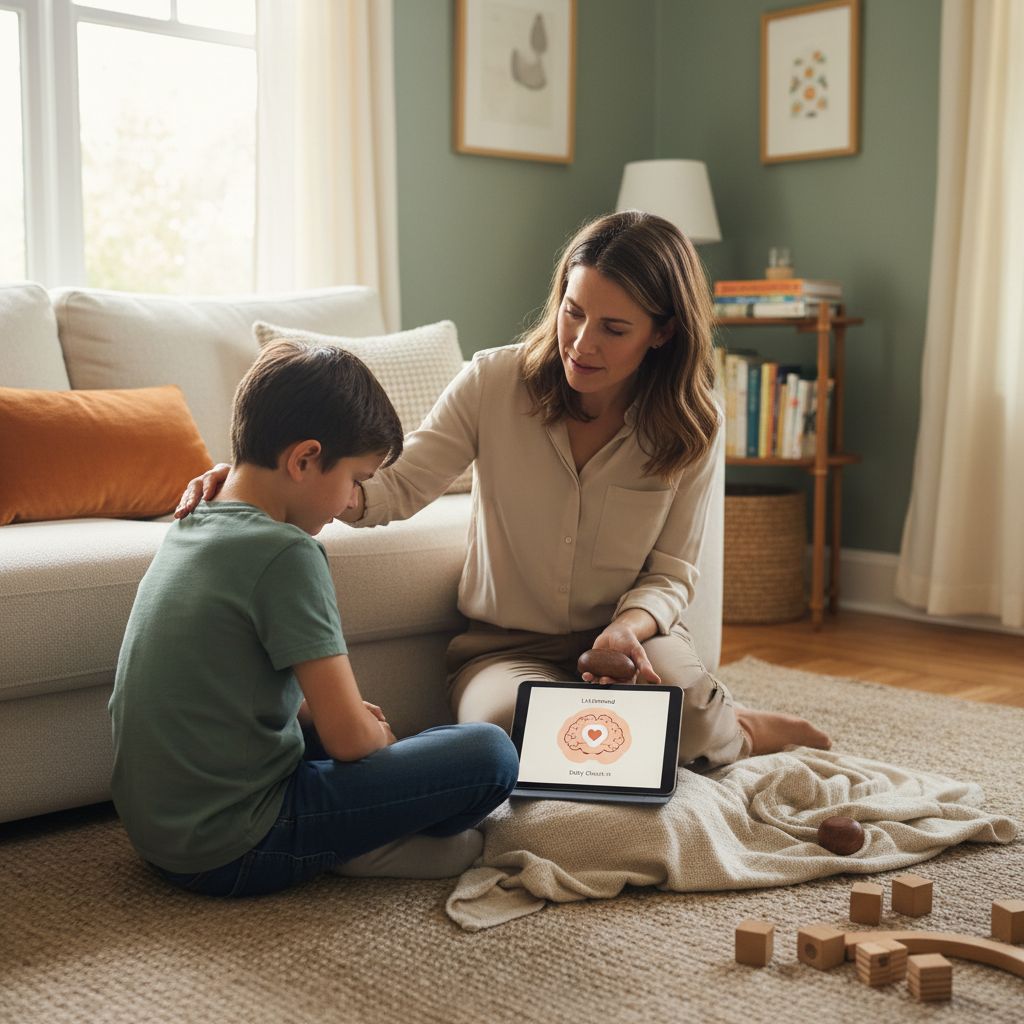
Small fingers curl into your sleeve. You feel the tug before you hear the quiet "don't go." The teacher kneels and murmurs something warm, then gently peels those fingers away one by one. And then you're walking back to the car, alone, with a tight throat.
If that's your morning, you are far from the only one. This article explains why drop-off gets so hard between the ages of 4 and 7, and it offers a simple goodbye routine with the exact words to use at the door. It also describes when extra support is worth asking for.
First, the part you most need to hear: a hard goodbye doesn't mean you've done something wrong.
Why do school drop-offs feel so hard at this age?
Here's what's going on underneath. Young children are still learning, in their bones, that the people they love come back. School asks them to test that lesson every single morning. Six hours is a long stretch away from their safest person.
And it doesn't always get easier in a straight line. A new school year, a new teacher, a change at home, even one rotten night of sleep can stir up old feelings. Your child who waved you off cheerfully last term might suddenly cling to your leg. That's not a step backward. It's a big feeling looking for somewhere to land.

Some children find the school gate itself extra heavy. The noise, the crowds, the jostling and the sudden shift from home to "everything happening at once" can feel like a lot. Children with big feelings, sensory needs or anxious temperaments often experience it this way. It's simply how some children take in the world.
Here's the part that's easy to miss. Crying at the door is a normal, common way for a child to show they feel safe enough with you to let it out. They're not saving the hard stuff for the stranger at the gate. They're handing it to you.
One gentle note. If the tears stop two minutes after you leave, the feelings were still real. Both things can be true at once.
Understanding the why is useful, but it's the small preparations that change the morning, and those start the night before.
What can I do tonight to make tomorrow's goodbye easier?
Tonight is where the calm gets built. Start with the practical stuff. Pack the bag, lay out clothes, and aim for an earlier bedtime if you can. A rushed morning raises everyone's stress before you've even reached the door, so take that pressure off now.
Then pick a relaxed moment (dinner, bath time, the drive home) and name tomorrow out loud. Keep it plain and predictable. "Tomorrow I'll walk you to the door, we'll do our goodbye, then I'll go to work and pick you up after school." Children feel safer when they know the shape of the day.
Next, play it out. Swap roles and let your child be the parent while you're the one who has to say goodbye. They get to practise with the power in their hands. Plus, it's often funny, and a little laughter loosens up a heavy topic.

You can also send a small comfort link along with them:
- A drawing tucked in a pocket
- A tiny heart on the wrist
- A family photo in the school bag
- A shared secret word only the two of you know
Finally, watch your own face. Children read us closely at the door, and they'll borrow whatever they find there. So keep your tone steady and warm. You don't need to hide your feelings. You just need to show that the goodbye is safe, and that you'll be back.
With the groundwork laid, the next question is what to say once you're actually standing at the classroom door.
What should I actually say at the classroom door?
Keep it short. Keep it the same every day. A predictable goodbye gives your child something solid to lean on, and a long one just gives the worry more room to grow. Aim for this sequence: hug, one line, wave, go.
For ages 4 to 7, try something like this:
"I know goodbyes feel big. I will be back after afternoon snack. You can do this, and your teacher is right here."
When the tears are already flowing, validate first and reassure second. Skip the "there's nothing to cry about" line (they'll hear it as "you're wrong to feel this"). Try this instead:
"You really don't want me to go. That makes sense. I love you and I will see you at 3:15."
Now the habits to drop. Don't sneak out while they're distracted. It feels kinder in the moment, but it can make tomorrow's drop-off harder because your child learns they can't trust you to say goodbye. Don't come back for extra hugs, either. Each return tells them the goodbye isn't final. And don't bargain at the door ("Just stop crying and I'll bring you a treat"), because that turns a hard moment into a negotiation.
Older kids need a lighter touch. At ages 8 to 11, agree on a private signal ahead of time, like a double tap on the shoulder. It says "I'm with you" without a single word. At ages 12 to 14, a quiet "text me at break if you need to" plan works well, and you should let them decide how visible the goodbye is. A nod from the car might be plenty.
Whatever the age, finish by handing your child over warmly. Make eye contact with the teacher or another trusted adult, say a quick hello, then step back. That handoff lets you leave without lingering, and it shows your child that someone good is already there to catch them.
Even the best routine will meet a rough patch now and then, so it helps to know what to do when mornings take a step back.
How do I handle the days when it gets worse again?
Setbacks happen. Almost every child has a rough morning after a weekend, a holiday, a bout of illness or a hectic week. It doesn't mean the progress you've seen has vanished. It means your child is human.
Look at the wider picture, too. A poor night's sleep, low energy, an empty stomach, a shake-up at home or a worry about a friend can all colour a morning. Sometimes the goodbye isn't the real problem. It's just where the feeling shows up.
On the day itself, keep things simple:
- Stick to the same routine you always use.
- Stay kind and brief. A warm, confident goodbye beats a long one.
- Skip the big talk while your child is upset. Save it for a calm moment later, like the walk home or bedtime.
It also helps to check in with the teacher about how the day goes after you leave. That's how you tell a hard goodbye from a hard day. Those two need different responses.
Finally, consider noticing patterns over several days. A short daily check-in on mood, sleep and behaviour makes it easier to see what helps, and it gives you something concrete to share with a teacher or professional.
And look after yourself. On the walk back to the car, take one slow breath. Then think one kind thought about how you handled it. You did your best this morning (and that counts).
Most of the time, steady routines and patience are enough. Occasionally, though, a child needs more than that, and it's worth knowing the signs.
When to talk to a professional
Most school worries fade with time and a little steady support. Some don't. Here are the signs worth raising with your child's pediatrician, GP or a child psychologist:
- Distress that lasts several weeks without easing, or grows stronger instead of softer.
- Trouble with sleep, appetite or health. Think frequent stomach aches or headaches on school mornings, nightmares, or struggling to settle at night.
- Regular school refusal, or being unable to settle at school at all after the first part of the day.
- Worries that spread beyond school, like being unable to be in another room from you or to go to a friend's house.
- Any sign your child feels unsafe, or something they say about school or another child that worries you.
Asking for support is an ordinary, caring step. It isn't a sign you've failed, and it doesn't mean something is "wrong" with your child. Think of it as getting an extra pair of eyes.
Before the appointment, jot down what you've noticed. When is it worse? What helps, even a little? A few quick notes make the conversation far more useful than trying to remember it all on the spot.
For general guidance, the NHS, the American Academy of Pediatrics and the Child Mind Institute are all reputable places to start.
Small goodbyes, steady love
Drop-offs get easier. Not overnight, and not in a straight line, but they do. A steady routine helps, and so does a parent who keeps showing up, day after day, even when the goodbye stings.
So try one small thing tonight. Choose a single phrase from this article and practise it with your child at bedtime. Over the next few days, notice how mornings feel. A notebook or a short daily check-in works well for jotting down mood, sleep and what helped, so patterns are easier to spot and share with a teacher or professional.
A tearful goodbye often sits right next to a child who feels secure enough to show you how they feel. That's trust, not failure. And you're already doing the most important thing: showing up, again and again.
See what is behind the good and hard days
Littlemind is a 30-second daily check-in for parents of kids aged 4 to 14. Over a few days, gentle AI insights show you patterns in mood, sleep and behaviour, and what helps.