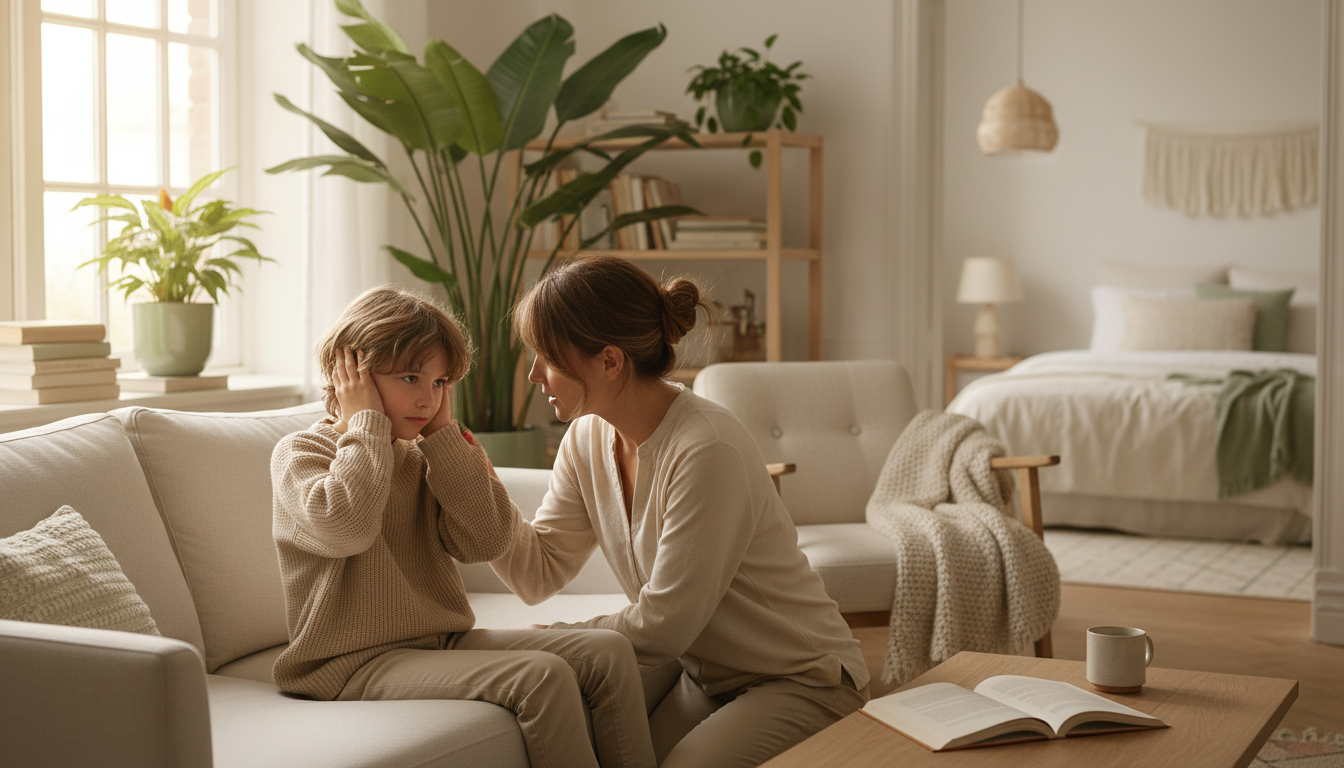
You ask, "How was your day?" and get a "Fine," maybe with a shrug. Then at 9 pm, in the dark, your child says something that matters.
This happens in lots of homes, and it doesn't mean you're doing anything wrong. Often it simply means the question was too big for the moment.
This article offers questions that invite real answers, plus a calm way to respond when they come. Here's a small thing to try tonight.
Why does my child say 'fine' when I ask how they feel?
You ask, "How was school?" You get "Fine." Maybe a shrug. Then at 9 pm, when you're one foot out of the bedroom door, the whole story tumbles out. Someone was mean at lunch. The test went badly. They've been worried about it all day.
It's maddening. It's also normal.
Start with why "fine" happens. Big, open questions like "How are you feeling?" are hard for kids. Feelings are fuzzy. Putting them into words takes energy, and your child has just spent a long day holding it together at school. Sometimes they don't know yet what they feel. "Fine" is the quickest true-enough answer.
So change the goal. You're not extracting an answer. You're making it easy and safe to share. And a short reply still counts as a good start.
Tonight, try one small step. Drop "How was your day?" and pick one specific question from the sections below. Ask it. Then see what comes back.
When is the best time to ask your child about their feelings?
Before choosing the question, it helps to choose the moment, because the same words land very differently at different times.
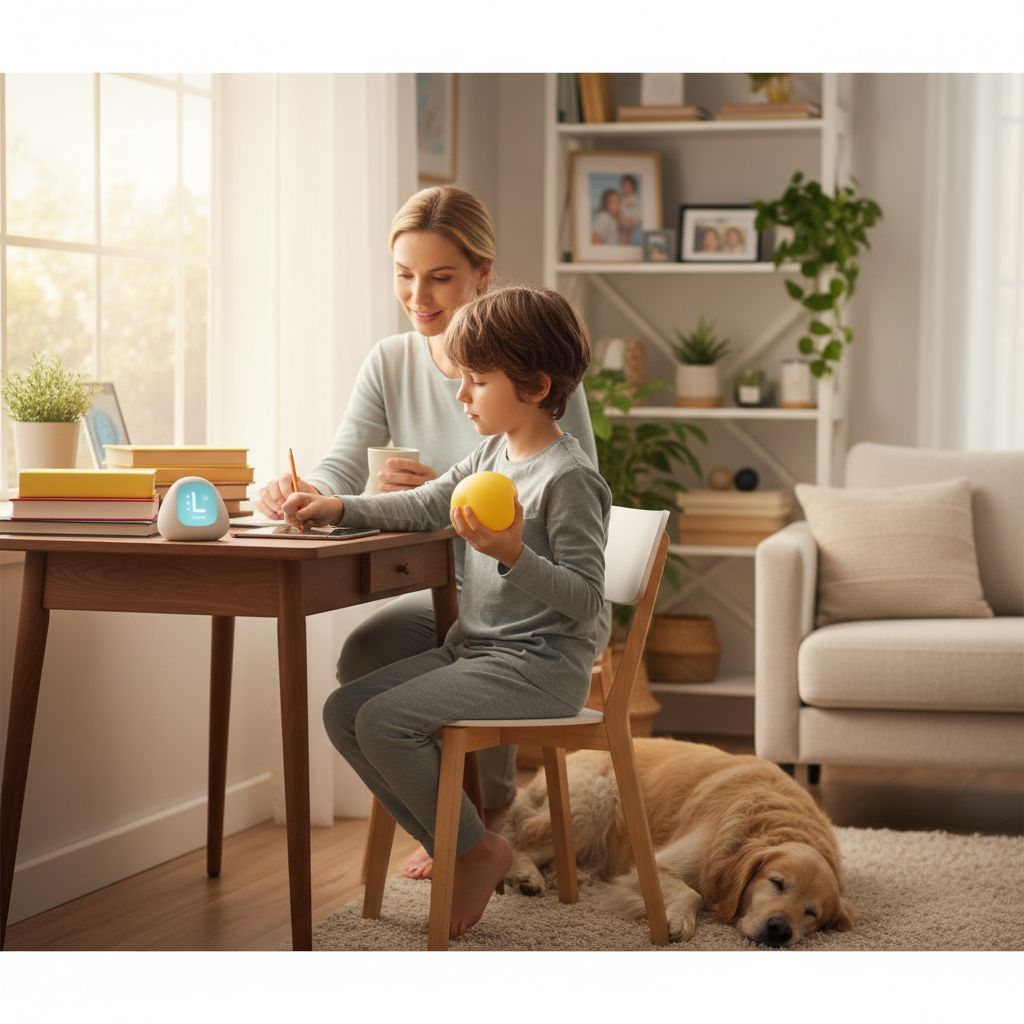
Think side-by-side, not face-to-face. Eye contact can feel like an interrogation, especially to a kid who's still figuring out what they feel. So talk while your hands are busy. Car rides, walking the dog, baking, drawing, building Lego, doing the dishes. The activity gives their eyes somewhere to land, and the pressure drops.
Bedtime works well for older kids. Keep the lights low and your pace slow. And when they say something big, don't pounce. A quiet "Mm, tell me more" keeps the door open.
Timing matters in the other direction too. Skip the first stretch right after school or after a screen ends. Many kids are tired and wrung out then (they may need a snack and some quiet first). Also hold your questions in the middle of a hard moment. Feelings first, questions later.
Try a gentle invitation instead:
"I'd love to hear about your day whenever you're ready. I'll be in the kitchen."
It hands your child the controls. They know you're available, and they don't feel cornered.
Tonight's step: pick one low-pressure moment you already have, like the drive to practice or the evening dishes. Use that window, and see what comes up.
Questions to ask kids about feelings, by age
Once you've found the right moment, the next piece is the question itself, and what works at five looks quite different from what works at thirteen.
"How do you feel?" is a hard question. It's big and vague, and most kids answer with "fine." Specific, playful questions work better because they're easy to answer with one small detail. Think of it as lowering the bar to get in the door.
Ages 4 to 7
Little kids think in pictures, so give them pictures to work with. Try "If your tummy had a weather today, was it sunny, rainy or stormy?" Or "What was the silliest part of your day?" Or "Did anything feel a bit wobbly today?"
You can also pass the question through a toy. Ask, "Which stuffed animal is feeling the most like you right now?" If your child freezes, offer two choices ("Was it more sunny or more stormy?"). Drawing works too. Hand over some crayons and let the picture do the talking.
Ages 8 to 11
Now you can add a touch of reflection, as long as you keep it light. Try "What was the best and trickiest part of today?" or "Was there a moment you wanted to be somewhere else?" Others that tend to land: "If today had a title, what would it be?" and "Who did you sit with, and how did that feel?"
Dinner is a great place for "rose and thorn" (one good thing, one hard thing). Go first and share yours, so it feels like a swap and not a quiz.
Ages 12 to 14
Turn the intensity down and respect their privacy. A direct "So, how are you feeling?" can feel like a spotlight. Try "Anything on your mind lately, or is it a quiet kind of day?" or "What's something that annoyed you today? I'm happy to just listen." And ask, "Is there anything you'd like me to do, or do you just want me to hear it?"
Let them pick the setting and the length. Car rides and walks often work better than face-to-face. And if the answer is "not now," take it at face value. It isn't a rejection, and the door stays open.
Model it first
Kids copy what they see. So share a small feeling of your own before you ask for theirs: "I felt a bit rushed this morning." Keep it low-stakes and brief. You're showing them that talking about feelings is normal and survivable.
Tonight's step: Pick one question from your child's age group and try it once. No follow-up pressure, no digging. Just ask, listen, and see what you get.
What can I say when my child won't talk about it?
Even with a well-chosen question and a good moment, some evenings your child will still go quiet, and that deserves a plan of its own.
Ask once. Then stop. The second and third questions are where most of us go wrong, because pile-ons feel like an interview, and children clam up when they're being interviewed. Ask your one question, then sit in comfortable quiet and let them decide what to do with it.
Keep a few phrases ready that leave the door open without pushing through it:
- "That's okay, I'm here if you want to talk later."
- "You don't have to tell me now. I'll be nearby."
- "Would it be easier to draw it, or write it down?"
- "Want to tell me, or want a hug?"
You can also notice out loud instead of asking. Try "You seem a bit quiet since you got home. That's okay." Describe what you see, but don't guess the cause or label the feeling. It gives your child something to react to without a question to answer.
When they're stuck, hand them words. "Some kids feel mad and sad at the same time. Does that sound close?" If they say "Not quite, more like..." you've won, because they're now correcting you, and correcting is talking. Don't mind if you got it wrong. Being wrong helps here.
Some kids need even less language, especially when they're tired, overwhelmed or carrying big feelings. Offer a simple choice. A number from one to five. A colour. A weather picture (sunny, stormy, foggy). Pointing is far easier than explaining.
So here's tonight's step. Say "You don't have to tell me now" just once, and then watch. Plenty of children circle back an hour later, at bedtime or in the car, when the pressure's gone.
How to respond so your child keeps talking
When your child does open up, what you do in the next few seconds shapes whether they'll do it again.
Your first reaction does the heavy lifting. If your child shares something and gets a lecture, a quick fix or a gasp, they may share less next time. Kids notice what happens after they open up. They adjust.
So reflect before you fix. Try short phrases like "That sounds really frustrating," "It makes sense you felt left out," or "Thank you for telling me." They're simple, and they tell your child their feelings landed safely.
From about age 8 upward, you can also ask a direct question: "Do you want help, or do you want me to listen?" Older kids often appreciate being given the choice. (Younger ones may just need you to stay close and say less.)
Keep your face and voice calm, even when the content worries you. Your child is watching how you take it. If problem-solving is needed, save it for later or ask first: "Want to think of ideas together?"
Then follow up lightly the next day. Something like "I was thinking about what you said about lunch" shows it mattered. Don't push for more. Just let them know the door's still open.
One gentle note. Noticing patterns over several days can make it easier to see what helps. Which days feel harder? How do sleep and energy line up? A short daily check-in supports that, and so does a simple notebook. It also gives you something concrete to share with a professional if you ever need to.
Tonight's step: The next time your child tells you something small, reply with just a reflection and a thank you. Nothing else.
When to talk to a professional
Most of what's in this article is everyday parenting, but it's worth knowing when something more than a good question is called for.
Most kids have rough weeks. Some days they won't want to talk, and that's normal. What you're watching for isn't a single bad day. It's a pattern.
Here are signs worth raising with someone if they last for weeks:
- Low mood, irritability, worry or withdrawal that doesn't lift
- Changes in sleep or appetite that stick around
- Stomach aches or headaches with no clear cause that keep coming back
- Less interest in things they usually love
- School refusal, or a clear shift in how they're doing at school
- Friendships fading away
Safety comes first. If your child talks about wanting to hurt themselves or not wanting to be alive, or you're worried about their safety, get help right away. Call your local emergency number or a crisis line, and contact your child's doctor.
For everything else, start with your child's pediatrician or GP. They can rule out physical causes and point you to a child psychologist or counsellor if that makes sense. The school counsellor can be a helpful partner too, since they see your child in a different setting than you do.
Before the appointment, spend a couple of weeks jotting down what you notice and when. Track sleep, mood, energy and behaviour. A few simple notes give the professional a much clearer picture than memory alone.
And one last thing. Reaching out isn't a sign you missed something. It's a sign you're paying attention, and that's exactly what your child needs from you.
Start small tonight
You don't need a perfect plan. You need three things: a low-pressure moment, a specific question, and a calm, kind response to whatever comes back.
Some nights you'll get a shrug. Maybe a "fine." That's okay. Trust doesn't arrive in one big talk. It builds across dozens of small ones, and even the quiet nights count.
So pick one question from your child's age group above. Just one. Try it at one low-pressure moment this week, in the car or while you're washing dishes side by side, and don't expect a long answer. If you like, jot down what you notice over a few days to see what helps. And if worries linger for weeks, your child's pediatrician or GP is a good first step.
You're already doing something good by trying.