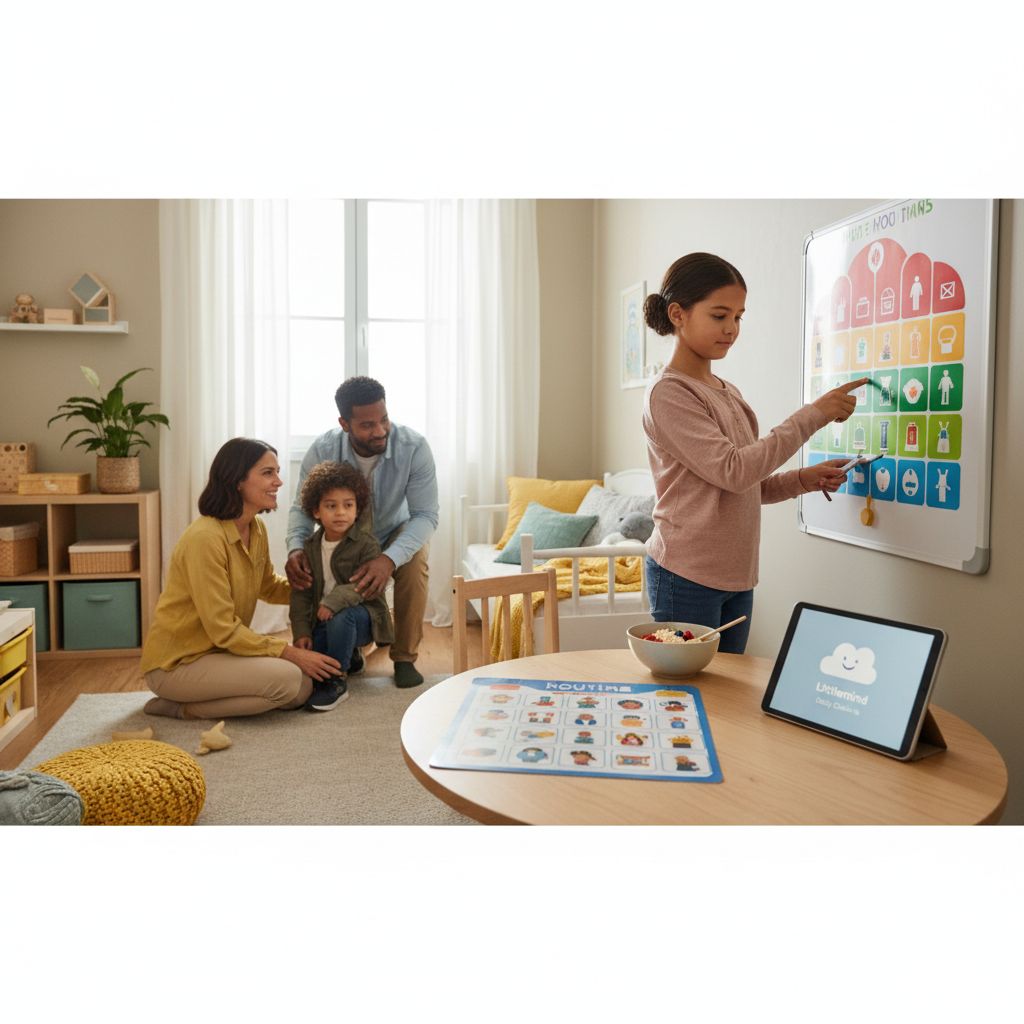
It's late afternoon. The worksheet is untouched, a pencil has snapped in two, and your child is on the kitchen floor saying they can't do it. You're tired, you're stuck, and you're quietly wondering what you're doing wrong.
You're not doing anything wrong, and neither is your child. This guide explains why homework pushes some children with ADHD past their limit, and it offers a calmer routine you can start trying tonight.
Why does homework set off such big feelings?
Think about your child's day. Seven hours of sitting still, following rules, reading the room and swallowing frustration. By the time they get home, the tank is close to empty. And then you ask for more.
Homework also happens to be a pile of the hardest skills there are. You have to start something with no one prompting you. You have to keep your attention on it. You have to stop what you're doing and switch to something else. Many kids with ADHD find exactly those moves the toughest, so the tears or the slammed door often show up right at the starting line.

Here's the reframe that helps. A meltdown is usually overwhelm, not defiance. The feelings arrive faster than your child's ability to manage them. They're not choosing to blow up (they'd much rather not).
Plus, some evenings are simply harder than others. A few things can lower the threshold:
- Hunger or a skipped snack
- Tiredness
- A rough night of sleep
- Sensory overload from a loud, bright or crowded day
One bad evening doesn't tell you much. Patterns across several days do. If Wednesdays always fall apart, look at what happened on Wednesday.
So keep one phrase close: "My child is having a hard time, not giving me a hard time." It won't fix the worksheet. But it changes how you walk into the room.
What helps before homework even starts?
Once you see how depleted your child is by the end of the school day, the first fix becomes clear: don't start with the work at all.
Think of the first twenty minutes after school as a buffer. Your child has held it together all day, and they need somewhere to put that effort down before they pick up more. So build a decompression window before any work begins.
Start with the basics: a snack, some water, and movement. A bike ride, a few minutes of jumping, a short walk around the block. Then give them a clear start time. You might say, "Snack and a run around first, then we'll look at it together at 4:30." Or, for a child who's still wound tight, "You don't have to start yet. Just come and sit with me when the timer goes."

Keep the same time and place most days. When the routine is predictable, your child's brain doesn't have to decide anything each evening, and that's one less fight before it starts.
How you shape it depends on age:
- Ages 4 to 7: Keep it very short. A picture checklist works well: snack, move, one small task, finish.
- Ages 8 to 11: Let them choose the order of their tasks. It's a small bit of control, but it matters.
- Ages 12 to 14: Agree the plan together. They'll resist a routine that's simply handed down (and honestly, who wouldn't?).
Finally, check the environment quietly. Move screens out of reach, clear the table, and offer a fidget if it helps them focus. Small tweaks, done without fuss, make starting feel far less like a battle.
How can you make the work itself feel smaller?
A calm start is a good beginning, but the task still has to feel doable once your child sits down.
A big task is often the trigger. So shrink it. Tonight, you're not asking your child to "do homework." You're asking for one small, finishable piece.
Break the work into chunks with a visible end. Pair each chunk with a timer so effort has a boundary. Try something like, "We'll do ten minutes, then a break, and you decide what the break is." Or when they freeze at the sight of a full page, "Let's do just the first question together."
Where you start matters too. Many kids build momentum by opening with the easiest or most interesting task. Others do better tackling the hardest thing first, while their energy is high. Watch your child's pattern for a week and let it guide you.
Body doubling helps more than you'd expect. Sit nearby and do your own quiet task (answer emails, fold laundry, read). They're no longer facing the work alone.
Then match the support to their age:
- Ages 4 to 7: One worksheet line at a time, with you beside them.
- Ages 8 to 11: A written or drawn list they can tick off. The ticking is half the reward.
- Ages 12 to 14: Help them plan the week's deadlines on one page. Then step back.
Keep your praise specific and about effort. "You kept going even when it was annoying" lands far better than "Good job." It names the hard part. And it tells your child what to repeat tomorrow.
What do you say and do when a meltdown has already started?
Even with the best routine, some evenings will still go sideways, and it helps to know in advance what you'll do when they do.
First, a hard truth. You can't reason with a child in full overwhelm. Their thinking brain has gone offline, so your job right now is regulating, not teaching. That comes later.
Lower your voice. Slow down. Say less than you think you need to. Then offer a calm presence and a way out of the room or the task. A few phrases that help:
- "This feels really hard right now. I'm here."
- "Let's take a break. The work will still be here."
- "Do you want a hug, some space, or a drink of water?"
What to skip? Threats, lectures, and taking everything away at once. They all pile more pressure onto a child who's already drowning. Save the "what happened" conversation for when everyone is calm.
Once the storm passes, keep the repair short and kind. Try "That was a tough one. What was the hardest part?" and then "What could we try differently tomorrow?"
Your approach shifts a little with age:
- Ages 4 to 7: Offer a calm-down corner and simple choices (this one or that one, not an open question).
- Ages 8 to 11: Help them name the feeling. "Frustrated? Tired?" Giving it a word often takes the edge off.
- Ages 12 to 14: Give space first. Then check in without pressure, maybe while you're doing something else side by side.
One more thing worth doing. Jot down what came before a hard evening: sleep, mood, energy, and what the task was. Over a few days, patterns start to show. And you'll have something concrete to share with a teacher or professional. A short daily check-in, like the one in Littlemind, is one easy way to keep track.
Talking with the school about homework that is too much
Those notes become especially useful when the problem isn't just your routine but the amount or type of work being sent home.
Asking the school to adjust homework is a reasonable request. Teachers want to know when something isn't working, and most will meet you halfway.
Start by asking what each task is meant to achieve. Then ask whether it could be shortened, split across two days or done a different way. You might write:
"We are finding that homework is causing a lot of distress at home. Could we talk about shorter tasks or a time limit that works for us?"
Agree on that limit together, so evenings don't stretch on. When the timer ends, stop. Add a quick note home to the teacher explaining where your child got to.
Finally, share the plan with co-parents, grandparents and after-school carers. Same routine, same phrases. That consistency helps your child feel secure.
When to talk to a professional
Sometimes routines and school adjustments aren't enough, and that's okay too.
Reaching out for help isn't a sign that you've failed. It's a sign you're paying attention. And you don't need to wait for a crisis.
Consider talking to someone if:
- Homework distress has gone on for weeks, even after you've changed routines
- It's affecting sleep, appetite, friendships or how your child feels about school
- Meltdowns involve hurting themselves or others
- Your child often says things like "I'm stupid" or "I hate myself"
If your child hasn't been assessed and you're wondering about ADHD, anxiety, learning differences or sensory needs, a conversation is a good first step. That's all it is. A conversation.
Start with your child's pediatrician or GP, who can talk through next steps. A child psychologist is another option. The school's SENCO or learning support team can help too.
Before the appointment, jot down what you've noticed over several days (times, sleep, mood, triggers). It makes the visit far easier. Treatment decisions, including any medication, belong with the professionals.
Start small tonight
You don't need to overhaul everything at once. Pick just one thing to try tonight: a snack-and-move break before homework, or a ten-minute timer with a break your child chooses. Let that be enough.
Progress rarely looks like a perfect evening. It looks like slightly shorter, slightly calmer ones, and that's worth celebrating.
Over the next week, quietly notice the patterns: sleep, mood, energy, and what the task was. If the hard evenings continue, bring those notes to your child's teacher or a professional. You'll be walking in with a clear picture, and your child will have an adult who is paying close attention.
See what is behind the good and hard days
Littlemind is a 30-second daily check-in for parents of kids aged 4 to 14. Over a few days, gentle AI insights show you patterns in mood, sleep and behaviour, and what helps.