You're standing in the supermarket queue. A minute ago, your daughter was chatting happily about her day. Now she's pressing both hands over her ears, her face is crumpling, and she's shouting at you for something you can't even name. Strangers glance over.
What just happened, and what do I do? If that thought sounds familiar, you're in good company. This is a common experience, and it isn't bad behaviour or bad parenting.
In this article, you'll learn how to spot the signs that your child has had too much input, what may be behind it, and which calm words and small steps you can have ready for tonight.
What does it look like when a child is overstimulated?
Picture a cup filling up. Noise, bright lights, scratchy fabric, a crowded room, a dozen questions in a row. Overstimulation is what happens when the cup overflows. A child's senses take in more than they can process, and their body and mind hit a limit.
That's a description of a moment. It's not a label or a diagnosis. Any child can get overwhelmed, especially when they're tired or hungry.

What you see depends on age.
Ages 4 to 7:
- Sudden tears or tantrums
- Covering their ears or eyes
- Clinging to you, or hiding under a table
- Running off
- Hyperactive silliness that tips into a meltdown
Ages 8 to 11:
- Irritability and snapping at siblings
- Complaints that clothes or tags feel wrong
- Shutting down
- A headache or tummy ache that appears out of nowhere
- Asking to leave
Ages 12 to 14:
- Retreating to their room
- Short answers
- Anger over small things
- Avoiding crowded places
- Seeming flat or exhausted after social events
Then there are the quieter signs. Some children go very still. Others zone out, staring past you. And some do the opposite, becoming unusually chatty or wild (some children shut down, others speed up).
The same child can look different from one day to the next. A kid who melts down at Monday's birthday party might sail through Saturday's. So don't read too much into a single moment. Patterns tell you far more.
Why does it happen at the end of the day, or after a fun outing?
Once you know what the signs look like, the next question is usually when they appear, and the answer often surprises parents.
Every child starts the day with an empty cup. Then the day pours in. Classroom noise. Lessons that demand focus. Crowded corridors, screens, new places, and the quiet effort of holding it together in front of teachers and friends. By mid-afternoon, that cup is nearly full.
And then they walk through your front door. Home is where they feel safe enough to let go, so that's where the cup spills. It isn't a sign you're doing something wrong. It's often a sign you're the person they trust most.

Some triggers are easy to miss:
- Busy classrooms and echoey halls or pools
- Bright, buzzing shops
- Scratchy clothes, labels and seams
- Strong smells
- Long car rides
- Back-to-back activities and birthday parties
- Screen time right before bed
Plus, the cup isn't a fixed size. Tiredness, hunger and a poor night's sleep all shrink it. So the supermarket trip that went fine on Tuesday can be too much on Friday. Same child, same shop, different day.
Here's the tricky part. Most children can't tell you what's wrong. They don't have the words, or they don't know themselves. So the behaviour is the message.
Try jotting down a few notes after a hard moment (a phone note works fine). Time of day. Where you'd been. How they slept the night before. After a couple of weeks, you'll likely start spotting your child's own triggers.
What can you do in the moment to help your child calm down?
When a hard moment is happening right now, a few simple moves can make a real difference.
Start by turning the volume down. Not your child's, the room's. Move to a quieter, dimmer spot. Switch off the music or TV. If several people are talking, ask them to pause. Then lower your own voice and slow your pace. Your calm is the first thing your child will borrow.
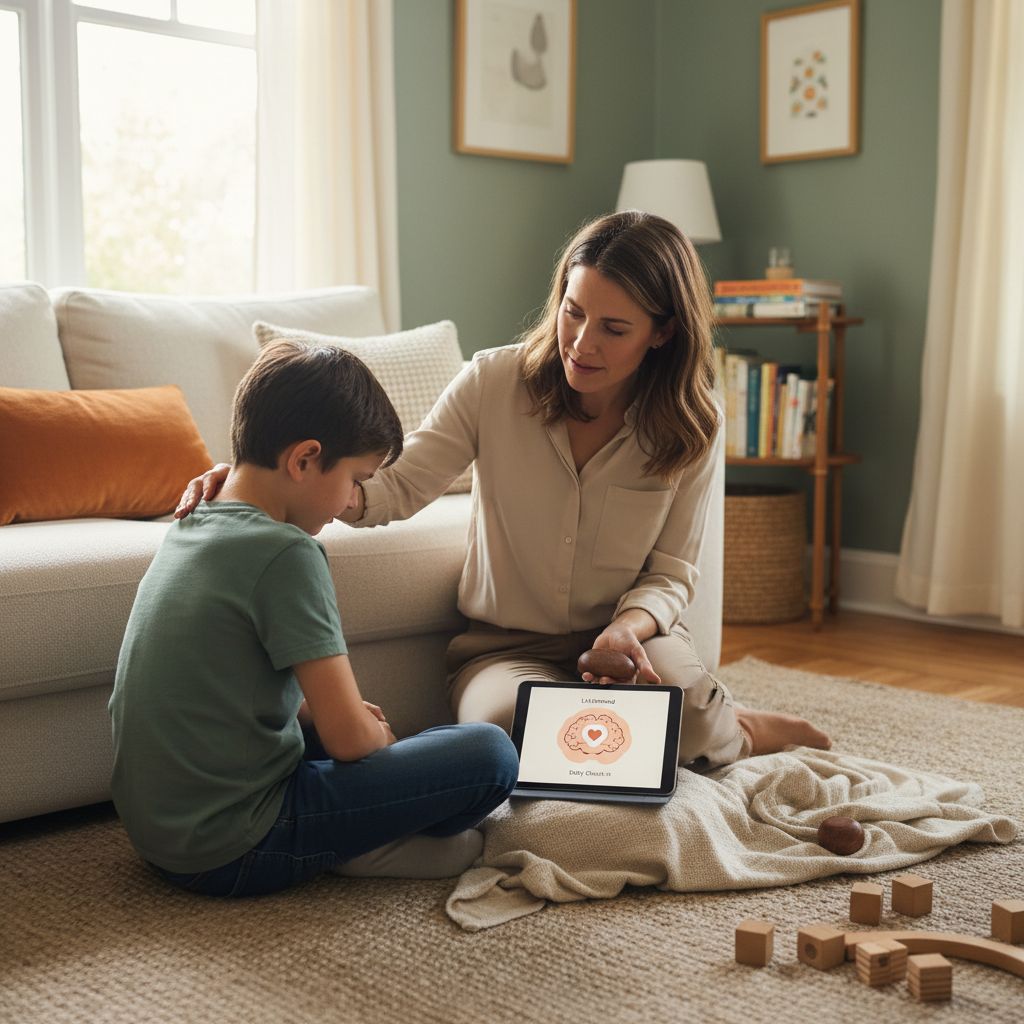
Next, say less and stay close. Skip the questions. Skip the lecture. And please skip "calm down" (it almost never works, and it can make a child feel they're doing something wrong). Offer your presence instead. Sit nearby, stay quiet, and let your body say the rest.
When you do speak, keep it short. Here's what that sounds like at different ages:
- Ages 4 to 7: "It's very loud in here. Let's go find a quiet spot together." And: "I'm right here. Your body is having a big feeling."
- Ages 8 to 11: "Looks like this is a lot right now. Want to step outside or have some space?" And: "You don't have to talk. I'll stay nearby."
- Ages 12 to 14: "Do you want me to stay or give you room? Either is fine." And: "We can leave early if you need to. No questions."
Then offer a few simple choices and let your child pick. Options might include:
- Headphones or ear defenders
- Dimmer light
- A weighted blanket or a firm hug, if they like pressure
- A drink of water
- A snack
- Slow breathing, like "smell the flower, blow out the candle," for younger children
Let your child lead on touch. Some kids want to be wrapped up tight. Others need a full arm's length of space. Both are normal, and neither means they love you less.
Finally, wait. Don't try to talk through what happened while the storm is still raging. Save that for later, when your child is calm and can actually hear you.
And if it all goes sideways in public, that's okay. Really. Other people's stares fade fast. Leaving early isn't a failure. It's a good decision, and your child will remember that you chose them over the situation.
How can you make hard days less likely?
Once the storm has passed, a little planning can help the next one arrive less often or feel smaller.
You can't prevent every rough afternoon. But you can stack the odds in your child's favour.
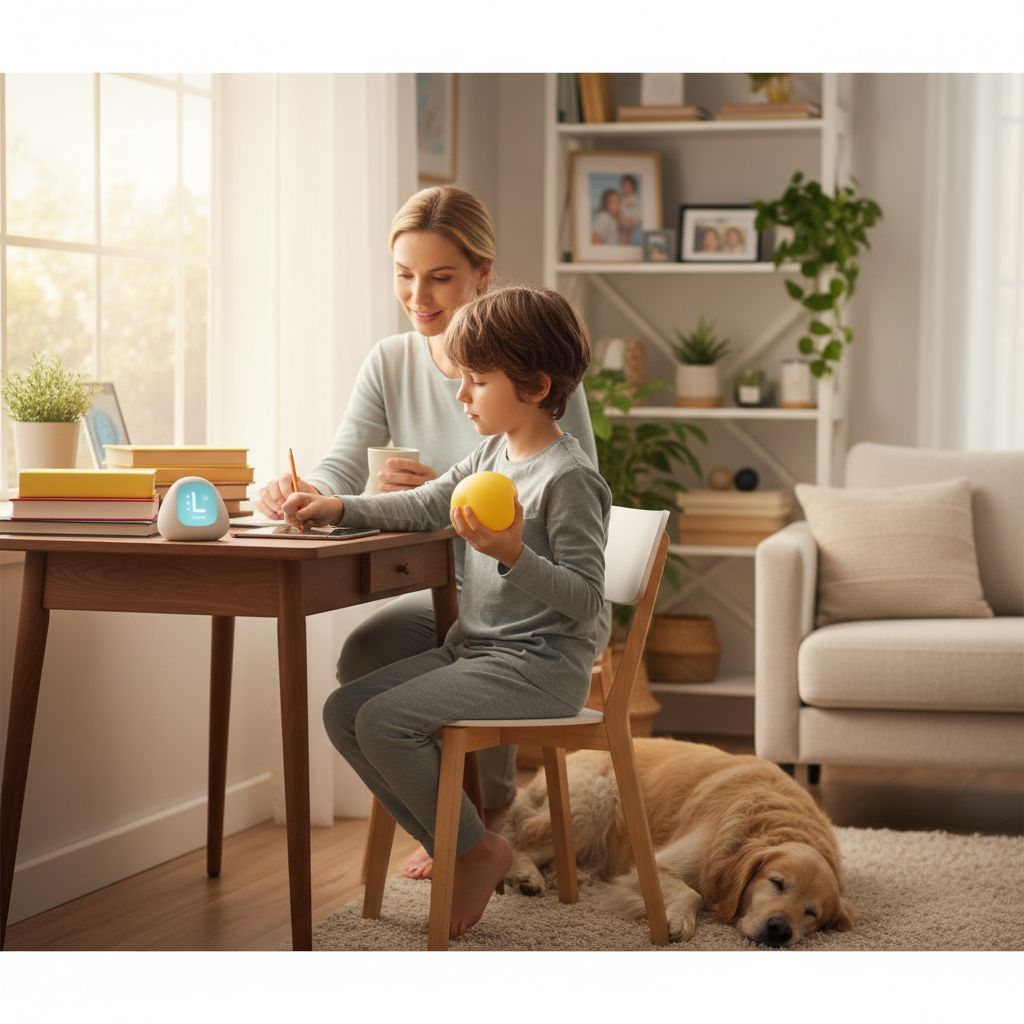
Start with downtime. After school or a busy event, give them a short quiet spell with no demands. A snack, a cosy corner, maybe a blanket. No questions about their day (those can wait).
Next, plan for the triggers you already know about. Arrive early or leave early. Shop at quieter times. Pack headphones. And agree a simple signal your child can use to say "I need a break," so they don't have to explain it in the moment.
A preview helps too. Try something like: "There will be music and lots of kids. We'll stay for a while and take a break outside if you want." Kids cope better when they know what's coming and know there's an exit.
Then look at the small daily comforts:
- Tag-free or soft clothes
- A regular bedtime
- Screens off before wind-down
- Routines they can predict
Individually, none of it looks like much. Together, it lowers the baseline stress they carry into the day.
You can also teach your child to spot their own warning signs, in ways that suit their age:
- Ages 4 to 7: a "feelings in my body" chat. Where do you feel it? Tight tummy? Hot face?
- Ages 8 to 11: a simple "battery" or "cup" check. How full is yours right now?
- Ages 12 to 14: respect their own strategies and their privacy. They may not want a chat. They may just want you to trust them.
It also helps to notice patterns over days. A short daily check-in on mood, energy, sleep and behaviour helps you see what actually works and gives you something concrete to share with a professional if you ever need to.
None of this is about wrapping your child in cotton wool. It's about helping them build tolerance gently, at their pace, with a safety net underneath.
When to talk to a professional
Most hard days are just that, hard days, but there are times when extra support is the kindest next step.
Most children have overwhelming days. Needing a little extra support doesn't mean you've done something wrong, and there's no reason to feel guilty about asking for it.
Some patterns are worth raising with a professional. Think about it if the overwhelm:
- Keeps happening over several weeks, or shows up most days
- Affects sleep, eating, school attendance or friendships
- Leads your child to avoid everyday places or activities
Other signs matter too. A child who seems to be in pain or distress deserves a conversation. So does one who hurts themselves or others during meltdowns, or whose behaviour suddenly changes from how they usually are.
Your child's pediatrician or GP is a good first step. They can talk through what you're seeing and whether a child psychologist or occupational therapist might help.
Before the appointment, jot down a few notes. When do the hard moments happen? What came before them? How long do they last? Concrete examples make the conversation far more useful than "it's been a tough month."
One caveat. This article is general parenting guidance. It can't say what's behind any one child's experience, and it doesn't replace professional advice. For further reading, the NHS, the American Academy of Pediatrics and the Child Mind Institute all offer reputable, parent-friendly resources you can look up.
You are already doing the right thing
Overload isn't a character flaw. It's a limit being reached, and every child hits theirs sooner or later. Calm, quiet and your closeness are usually the best first response.
You're already paying attention, and that's the most useful tool you have. So this week, pick one small thing to try: a quiet spell after school, one calming phrase like "I'm right here," or a quick note of what came before a hard moment. Then see what helps.
If worries last several weeks, or start to affect sleep, school or safety, it's worth raising them with your pediatrician, GP or a child psychologist. In the meantime, small daily observations add up to a clearer picture over time.