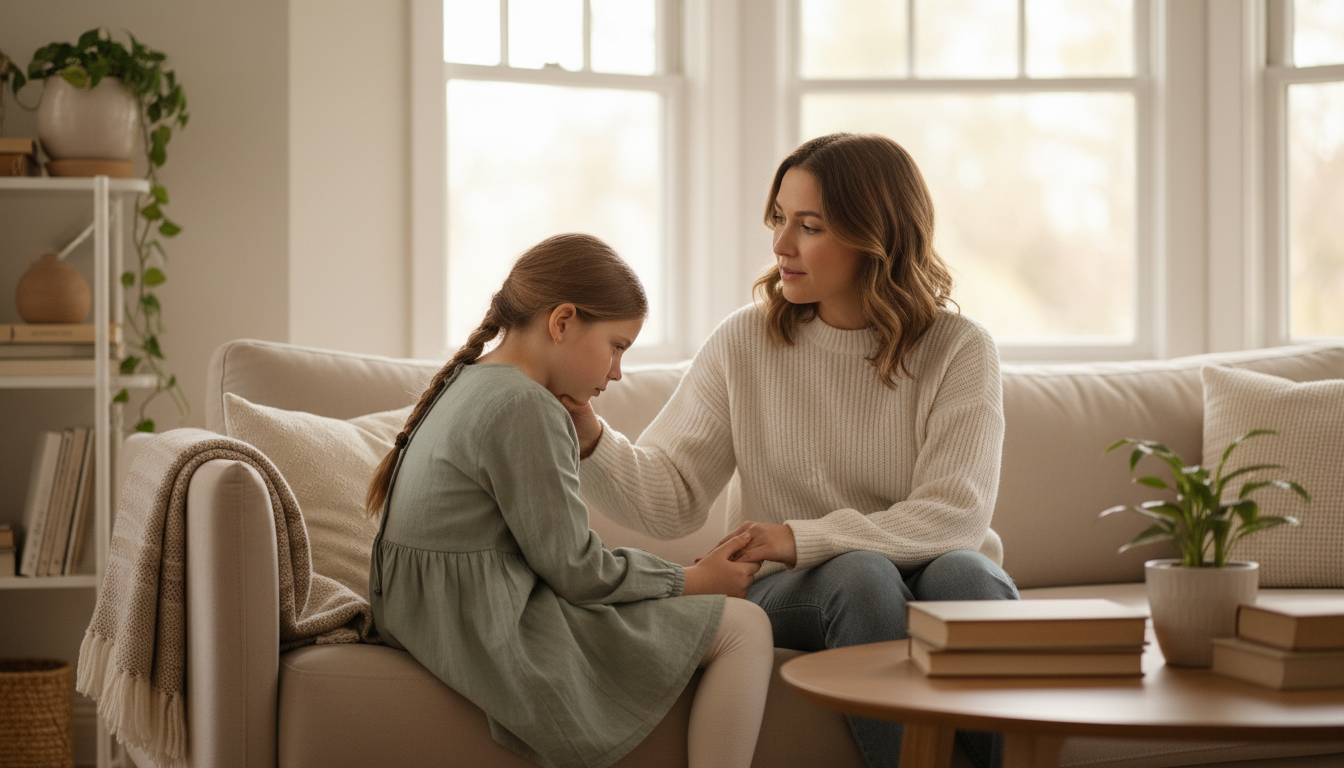
You pull up to the school gate. Your child climbs in, backpack thudding onto the floor. "How was your day?" you ask, as cheerfully as you can manage. "Fine." Then silence settles in for the whole drive home.
If you've felt that small pang, you're far from alone. Most parents want to know what's going on in their child's world, and also don't want to push too hard. It's a tricky balance.
This guide offers calm, practical phrases and habits you can try tonight, with ideas for every age from 4 to 14. No pressure, no perfect script, just gentle ways to make talking easier.
Why Your Child Goes Quiet After School
Picture your child's day. They sat still, listened, followed rules, waited their turn, and kept their feelings in check around dozens of other people. All while the room stayed loud. By 3:30, the tank is empty.
So when you ask, "How was your day?" you're handing a tired kid a huge, fuzzy question. Where would they even start? A whole day doesn't fit into one answer, and "fine" (or a shrug) is often the easiest way out.

Plenty of children simply need to unwind first. Give them a snack, some quiet, or a stretch of play before you expect words. Others open up much later, at bedtime or while you're washing up together, when the pressure's off and the lights are low.
And here's the part that's easy to miss. Kids with big feelings often hold it together at school, then save the hard moments for the people they trust most. That means quiet doesn't always equal "nothing happened." Sometimes there's more to share, and it just needs a safe moment.
That's why it helps to shift your goal. Connection comes first. Information comes second. If your child feels warm, welcome, and unhurried, the details tend to follow in their own time.
What to Do in the First Twenty Minutes After School
Understanding why kids go quiet leads to a simple idea: the moment they step out of school is the wrong time to start asking questions.
Your child has just held it together for six hours. Rules, noise, social puzzles, a lunchbox they may or may not have opened. So the first twenty minutes aren't for debriefing. They're for landing.
Lead with connection, not questions. Offer a snack, a hug if they want one, and a few minutes of shared quiet. At pickup, try this exact phrase:
"I'm so glad to see you. No need to talk, I'm here when you're ready."
Then let the age guide the rest.
Ages 4 to 7. Skip the talking at first. Put out a snack and something low-demand, like colouring, playdough, or a few minutes outside. Words tend to show up on their own once their bodies settle.
Ages 8 to 11. Hand them the first ten minutes. Music in the car, a favourite snack, or plain silence are all fair game. After that, offer a light opening: "Want to tell me one thing, or later?" Either answer is a good one.
Ages 12 to 14. Give space without disappearing. Stay nearby (in the kitchen, folding laundry, anywhere within earshot), keep your voice relaxed, and say, "I'm around if you want company." Then actually be around. Teens notice.
And if you're running on fumes yourself? You don't need a perfect routine. Nobody does. A predictable few minutes of calm, repeated most days, is plenty.
What to Ask Instead of "How Was Your Day?"
Once your child has had a chance to settle, the questions you choose can make all the difference.
"How was your day?" asks a kid to summarize eight hours in one word. "Fine" is the logical answer. Smaller, specific questions work better because they hand your child something concrete to grab.
Here's what to try, sorted by age.
Ages 4 to 7
- Who did you sit next to at lunch?
- What was the silliest thing today?
- Which toy or game did you pick at playtime?
- Show me how you played that game.
Ages 8 to 11
- What was the best part and the not-so-great part?
- Who made you laugh?
- What was something that surprised you?
- If today were a weather forecast, what would it be?
Ages 12 to 14
- Anything funny or annoying happen today?
- Who did you hang out with at lunch?
- What's the thing everyone's talking about at school right now?
Plus, you can change the format entirely. Play two truths and a lie about the day and let them guess yours. Ask them to rate the day from 1 to 10, then ask what would've made it one point higher. Or go first. Sharing something small about your own day (the weird meeting, the burnt toast) shows them how it's done and takes the pressure off.
Keep it light. Ask one or two questions, then let it go if they're not ready. Pushing usually shuts things down, and a kid who's left alone at 4 p.m. will often wander over at 9 with the real story.
When they do start talking, a few short phrases keep the conversation going without turning it into an interrogation:
- "Tell me more about that."
- "That sounds like a lot."
- "What was that like for you?"
These work because they don't judge or fix anything. They just say, "I'm listening."
Where Kids Tend to Talk (and How to Make Room for It)
The right question matters, but so does the setting in which you ask it.
Face-to-face talks can feel like interrogations to a kid. Side by side is easier. Think car rides, walking the dog, baking, drawing, shooting hoops, washing up. Hands busy, eyes elsewhere, and suddenly the words come out.
Bedtime is another big one. For ages 4 to 11, leave five unhurried minutes at the end of the night. Then try something simple: "Is there anything on your mind before sleep?" Don't rush to fill the quiet. Often it's the pause that does the work.
Kids aged 12 to 14 run on their own clock. They may talk late at night, or in short bursts, or at a moment that's wildly inconvenient for you. Being available on their schedule matters more than picking your own perfect timing.
Share a little of your own day too, including the small frustrations (the slow queue, the annoying email). That way talking feels like something your family just does, not an interview with you holding the clipboard.
And if words are hard, offer other routes:
- A drawing
- A note on the pillow
- A thumbs up or thumbs down
- A simple feelings scale, say 1 to 5
When they do share, listen without fixing. Say "That sounds hard" before you offer any advice. Then thank them for telling you, even when the news is small. That's how they learn it's safe to bring the bigger stuff.
Over time, noticing patterns can help too. A short daily check-in, for example, can make it easier to see which days are harder and what seems to help. If you ever need to talk with a professional, you'll have a clearer picture to share.
When to Talk to a Professional
Most of what we've covered is about everyday connection, but it's worth knowing when something more may be going on.
First, take a breath. A child who goes quiet about school is usually just tired, private, or still hunting for the words. Most of the time, that's a normal part of growing up.
But some signs deserve a conversation with your pediatrician, GP, or a child psychologist. Look for patterns that last several weeks:
- Low mood, withdrawal, or worry that doesn't lift
- Sleep or eating changes that continue
- Reluctance or refusal to go to school that keeps happening
- A drop in schoolwork, or in things they used to love
Don't wait if you're worried about their safety. The same goes if they mention being hurt or bullied, or talk about harming themselves. Reach out right away.
For next steps, keep it simple. Write down what you've noticed and when. Talk with their teacher. Then book a visit with your pediatrician or GP. This guide is about talking and connecting, and any worry about your child's wellbeing belongs with a qualified professional.
Small Moments Add Up
Here's the thing. The big sit-down talk rarely happens the way you picture it. What does happen is smaller. A quiet snack at the counter. One good question. A ten-minute car ride where nobody has to look anyone in the eye.
Those moments add up. Trust builds slowly, one calm, available evening at a time, and that's most of the job.
So this week, choose just one thing: a new question from the list, or one side-by-side moment like a walk, a bake, or a drive. Try it without any pressure to get a long answer.
It also helps to jot a quick note in a notebook or on your phone about what seemed to work and when your child opened up. Patterns become much easier to spot over time. And if a worry lingers, your pediatrician, GP, or a child psychologist is always a good place to take it.