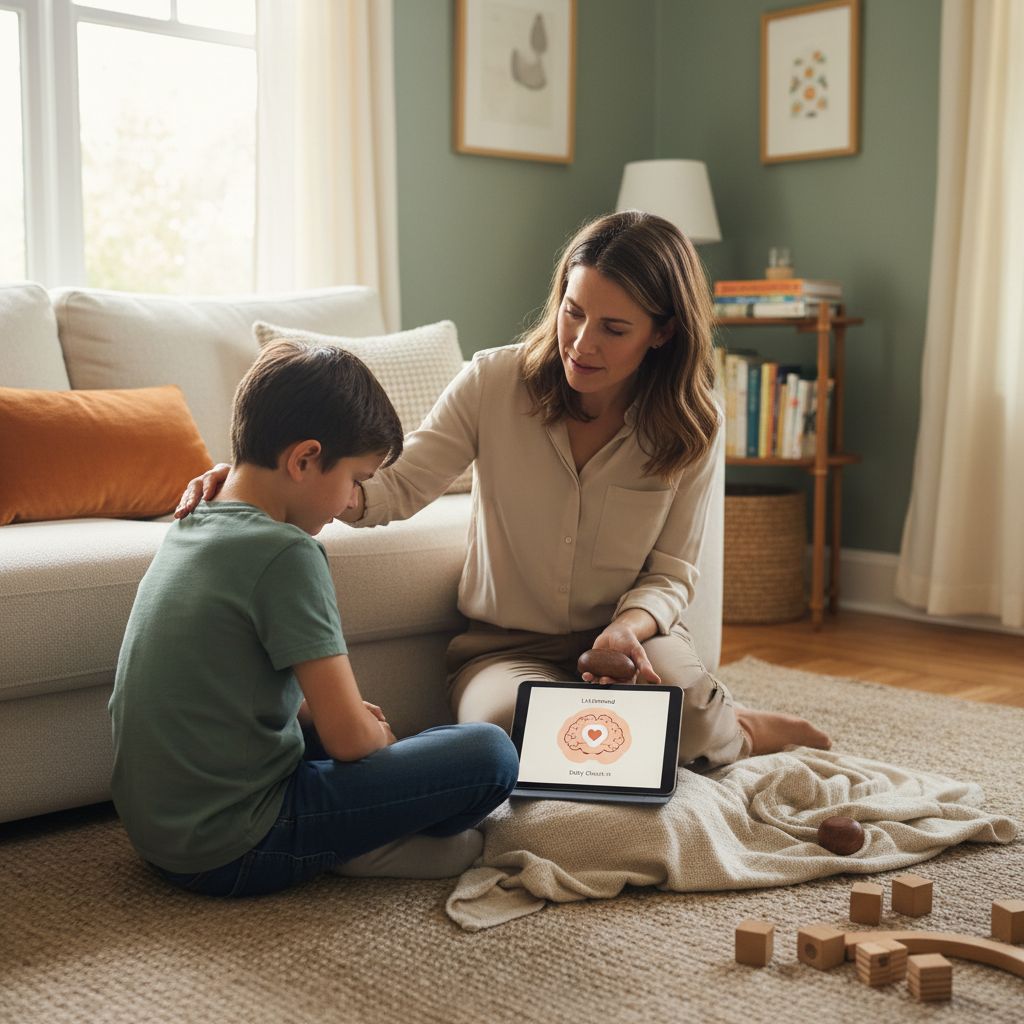
Every Sunday night, Maya noticed her eight-year-old son retreating into himself, quiet dinners, early bedtimes, a heaviness she couldn't quite name. But Thursdays? He'd burst through the door from soccer practice, breathless and grinning, animated about teammates and drills. The pattern was undeniable. It wasn't anxiety about school or family stress. He was missing something essential: community support for child wellbeing.
You've probably seen similar patterns in your own child. They thrive in certain environments and wilt in others. We obsess over nutrition labels, screen time limits, and bedtime routines, all important. But we rarely examine the invisible network of relationships that shapes how our children handle everything from playground conflicts to major life transitions.
This article explores why building community connections for children isn't optional parenting, it's essential infrastructure for their emotional resilience. You'll learn what the research reveals, how to spot when your child needs more social support, and practical strategies to build these networks intentionally.
Because hoping your child stumbles into support isn't a plan. Creating it is.
Why Community Support Matters More Than Ever for Children's Mental Health
Your child doesn't need a village just to survive. They need it to thrive.
When kids interact with teachers, coaches, neighbors, and family friends, they're building an emotional toolkit that one or two parents simply can't provide alone. Different adults model different coping strategies. One might show them how to laugh through frustration. Another demonstrates calm problem-solving under pressure. These varied approaches give children options when their own big feelings hit.

Community connections also create something parents can't manufacture on their own, a sense of belonging that extends beyond the front door. Children who feel rooted in a broader network develop stronger identities. They see themselves reflected in multiple contexts. The kid who struggles at home might discover they're brilliant at chess club, or kind in ways their softball coach notices first.
And when life gets hard (divorce, job loss, a family illness), community acts as a safety net. Kids with multiple trusted adults to turn to show significantly better outcomes during stressful transitions. The pressure doesn't land solely on exhausted parents trying to hold everything together.
Research consistently shows children with strong community ties outperform isolated peers both academically and emotionally. They're more likely to graduate high school, less likely to experience depression, and demonstrate better conflict resolution skills. But here's what the statistics don't capture, these kids also just seem more confident navigating the world.
Social skills don't develop in a vacuum. They grow through practice with different personalities, communication styles, and relationship dynamics. The child who only interacts with immediate family misses crucial rehearsal time. Meanwhile, community-connected kids learn to read social cues across contexts, adapt their behavior appropriately, and build relationships with all kinds of people.
That's not helicopter parenting or outsourcing responsibility. That's giving your child what humans have always needed, a web of relationships that catches them when they stumble and cheers when they soar.
But how do you know when your child needs more connection versus just having an off week?
Using Pattern Recognition to Identify When Your Child Needs More Community Connection
Your daughter bounces through the door on Tuesdays. Drags herself home on Thursdays. That pattern matters.
Behavioral shifts often hide in plain sight until you track them. A child who's chatty on weekends but withdrawn after school might be struggling with peer connections during the day. Mood dips that cluster around certain times, say, every Wednesday evening, could signal something specific about that day's social environment.
Littlemind's tracking reveals these correlations. You might notice your son's anxiety scores drop by half on days when he has soccer practice. Or that your daughter's emotional regulation improves dramatically after playdates with specific friends. The data shows what verbal check-ins often miss.

Here's what to watch for:
- Withdrawal patterns, avoiding previously enjoyed activities, especially social ones
- Weekend recovery cycles, child seems lighter on Saturdays, heavier as Monday approaches
- Post-school emotional crashes, consistently needing hours to decompress after school
- Limited relationship diversity, tracking shows interactions only with immediate family or one friend
But don't confuse introversion with isolation. An introverted child might show stable, positive moods with limited social interaction. That's their baseline. Concerning patterns show declining mood correlated with reduced connection, or anxiety spikes around social situations they once handled fine.
The data becomes a conversation starter. "I noticed you seem happier on days when you see Emma. Want to invite her over more often?" You're not accusing. You're observing patterns together and problem-solving as a team.
Once you've identified the gaps, it's time to fill them, and that starts closer to home than you might think.
Five Practical Ways to Build Community Connections for Your Child
Building meaningful connections for your child doesn't require elaborate plans. It starts with consistency and intention in everyday choices.
Structured activities create natural bonds. Sign your child up for something they genuinely enjoy, soccer, piano, robotics club, whatever sparks their interest. The magic happens through repetition. Same coach every Tuesday. Same kids in art class each week. These predictable touchpoints give children time to move past surface friendships. Start with one activity and stick with it for at least a season before adding more.
Your neighborhood is an untapped resource. Host a monthly pizza night in your driveway. Invite the kids two doors down for Saturday morning pancakes. Learn your neighbors' names (yes, the adults and the children). When parents know each other, kids get more freedom to knock on doors and play. Block parties don't need to be fancy, folding tables and potluck dishes work fine.
Connect across generations. Set up regular FaceTime calls with grandparents, not just on birthdays. Look into mentorship programs like Big Brothers Big Sisters or local tutoring initiatives. Family friends who aren't related can become chosen aunts and uncles. These relationships teach children that community extends beyond their age group.
Show up at school. Volunteer in the classroom once a month. Join the PTA or parent organization. Learn your child's teacher's name and actually talk to them at pickup. When parents are visible, children feel more rooted in their school environment.
Shared values matter. Whether it's a faith community, cultural organization, or civic group, find spaces where your family's values are reflected and celebrated. These groups offer built-in support systems and multi-generational connections. Attend regularly enough that faces become familiar and your family becomes part of the fabric.
These strategies work beautifully in stable times, but what about when everything changes?
Supporting Community Connections During Major Life Transitions
Divorce. A cross-country move. Starting at a new school. These transitions hit kids hard, not just emotionally, but socially. When everything else feels unstable, community connections become the steady ground beneath their feet.
Technology makes maintaining old friendships easier than ever. Schedule regular video calls with former neighbors or classmates. But don't stop there. Help your child bridge worlds by inviting old friends to visit the new neighborhood, or organizing meetups halfway between old and new homes. These connections remind kids that relationships can survive change.
Building new networks takes intentional effort. Start with structured activities, sports teams, art classes, scouts. These give kids repeated exposure to the same faces, which creates natural friendship opportunities. Visit the same playground at consistent times. Introduce yourself to neighbors with kids. Host a casual get-together and invite three families from school.
Here's an unexpected upside of co-parenting: each household can cultivate different community networks. Your child now has access to two neighborhoods, two sets of family friends, potentially two school communities. That's not splitting time, that's doubling connections.
Watch Littlemind's data during transitions. If social check-ins decline or your child reports fewer interactions, that's your signal to intervene. Sometimes the solution is simple scheduling. Sometimes it means seeking help.
Know when to bring in professionals. If your child withdraws for more than a few weeks, talk to their school counselor. If behavioral changes accompany the isolation, connect with a family therapist. These experts can identify whether your child needs clinical support or just more time to adjust.
Building Your Child's Village Starts Today
Think of community building as preventive care for child mental health. Not just playdates and birthday parties, you're creating a safety net that catches your child before problems escalate. A network of trusted adults who notice when something's off. Friends who provide belonging. Routines that create stability.
Yes, it takes intentional effort. You'll need to show up consistently, reach out first, coordinate schedules through community involvement in parenting. But the dividends compound exponentially. One strong friendship can anchor a difficult year. A connected neighborhood means your child always has somewhere to turn.
Remember Maya's son from the beginning? After connecting with two other soccer families for regular playdates and building relationships with neighbors, those Sunday night slumps diminished. The anxiety didn't vanish completely, but he now had multiple places to belong, multiple adults to confide in, a community that knew his name.
You don't need to build the entire village overnight. Start with two weeks of simple tracking. Notice when your child's mood lifts. When they seem most confident. When connection happens naturally. Those patterns reveal exactly where to focus your energy.
Ready to understand what community connections your child needs most? Start tracking with Littlemind today, free for two weeks. Discover the patterns hiding in plain sight, and build the support network that helps your child thrive.
See what is behind the good and hard days
Littlemind is a 30-second daily check-in for parents of kids aged 4 to 14. Over a few days, gentle AI insights show you patterns in mood, sleep and behaviour, and what helps.