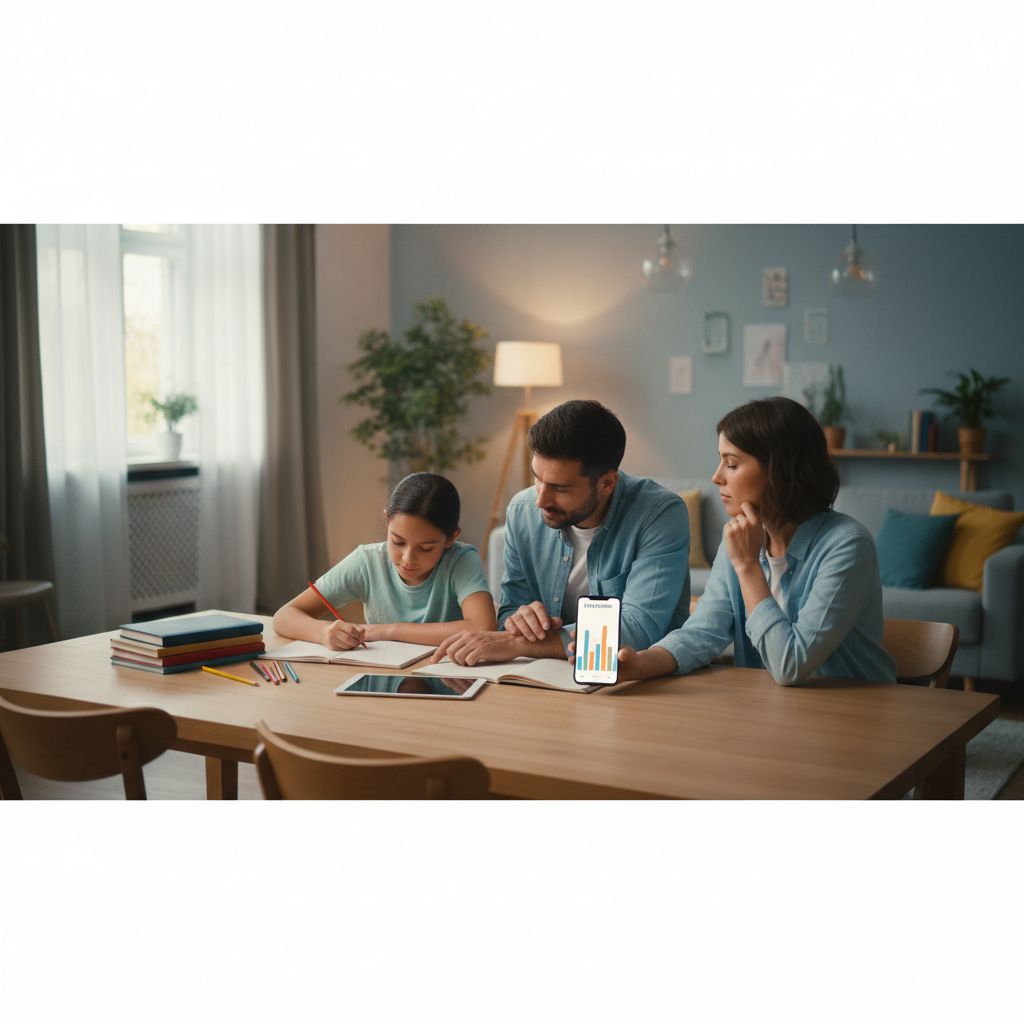
Your child was fine at pickup. By dinner, they're in tears over nothing. You assume it's something at school—but what if Sunday night's Netflix binge is Monday's meltdown? The connection between sleep and child emotional health runs deeper than most parents realize, yet it remains one of the most overlooked factors in understanding why our kids struggle.
We're quick to analyze friendship dynamics, screen for learning disabilities, and question parenting approaches. But sleep? It seems too simple to be the answer. Except it isn't simple at all—it's foundational. When sleep falters, everything else your child is working to manage becomes exponentially harder.
The good news: unlike many variables in your child's life, sleep is something you can actually influence. Understanding how children's sleep and behavior intertwine gives you a powerful lever for supporting their emotional wellbeing, especially during stressful transitions.
Here's what every parent needs to know about why rest matters so much—and what you can actually do about it.
The Sleep-Emotion Connection: Why Rest Is Critical for Developing Minds
A child's brain runs on sleep. Not just any sleep — the deep, consistent kind that lets developing neural pathways do their essential work. When kids don't get enough, the effects show up fast in their emotional world.
The prefrontal cortex, which handles emotional regulation and impulse control, is still under construction until the mid-20s. It needs sleep to build properly. Meanwhile, the amygdala — your child's emotional alarm system — becomes hyperactive with sleep loss. This creates a perfect storm: weakened emotional brakes plus an overactive threat detector. Result? More meltdowns, bigger reactions, harder recoveries.

REM sleep does something remarkable for children's emotional development. During those dream-filled cycles, the brain processes emotional memories from the day. It softens the sharp edges of stressful experiences and strengthens positive emotional learning. Skip the REM sleep, and yesterday's playground conflict might feel just as raw this morning.
Here's what kids actually need:
- Ages 4-5: 10-13 hours per night
- Ages 6-12: 9-12 hours per night
- Ages 13-14: 8-10 hours per night
Most aren't getting it. And the gap between what they need and what they're getting compounds daily.
Children face a unique vulnerability during stressful transitions. Their stress response systems are still maturing. They haven't developed the cognitive tools adults use to process worry and anxiety. When a divorce happens or a move disrupts their routine, their nervous systems run hotter than ours. They need more sleep to recover, but stress typically delivers less. It's a cruel irony.
Plus, children's circadian rhythms are less stable than adults'. A few nights of disrupted sleep can throw off their entire system for weeks. What might be a minor sleep hiccup for you becomes a sustained regulation crisis for them.
The Behavioral Ripple Effect: What Sleep Deprivation Looks Like in Daily Life
Understanding how sleep affects mood in children starts with recognizing the signs hiding in plain sight.
You've seen it a hundred times but maybe never connected the dots. Your usually cheerful seven-year-old snaps at breakfast. Your pre-teen who loved soccer suddenly wants to skip practice. That's not just a bad mood — it's their brain running on fumes.
Sleep deprivation doesn't announce itself with a neon sign. It shows up as irritability that seems to come from nowhere, impulsive decisions that make you wonder what they were thinking, and an attention span that evaporates mid-sentence. Many parents miss these signs because they look like typical kid behavior. They're not.

Here's what makes it tricky: poor sleep looks completely different depending on age. A five-year-old melts down over the wrong color cup. A ten-year-old withdraws to their room and won't talk. Same root cause, totally different presentation. Younger kids externalize — they throw fits, bounce off walls, can't sit still. Older kids internalize — they seem moody, disengaged, "just going through a phase."
And then there's the vicious cycle nobody warns you about. Stress disrupts sleep. Poor sleep amplifies how the brain responds to stress. So that kid who's already anxious about school? Bad sleep makes their stress response go haywire, which makes sleeping even harder.
Watch for patterns. Monday mornings are a disaster after weekend sleep chaos. After-school meltdowns happen because they've been holding it together all day on insufficient rest. Bedtime resistance? Often a sign they're overtired (yes, exhausted kids fight sleep harder). These aren't discipline problems. They're biological red flags your kid's system is maxed out.
Building Better Sleep Hygiene: Evidence-Based Strategies for Every Age
Once you recognize the problem, the question becomes: what actually works to improve child sleep quality?
Sleep hygiene isn't complicated. But it does require consistency — and that's where most families struggle.
The 3-2-1 rule gives you a simple framework. Three hours before bedtime, cut off heavy meals (digestion disrupts sleep). Two hours out, stop homework and stressful activities. One hour before lights out, screens go away. All of them.
Your child's bedroom should feel like a cave. Cool (around 65-68°F works best for most kids), dark (blackout curtains help), and quiet (white noise machines can mask household sounds). A comfortable mattress matters more than you think — if your child wakes up stiff or cranky, that's a clue.
Routines signal safety to a child's brain. Same time every night. Same sequence of events. For younger kids, visual schedules work wonders — picture cards showing bath, pajamas, teeth, story, bed. Pre-teens benefit from a 30-minute wind-down protocol they help design. Maybe that's reading, journaling, or gentle stretching. Let them own part of the process.
But real life isn't perfectly consistent. And that's okay.
Co-parenting schedules mean two different bedtimes? Keep the core routine identical at both houses — same sequence, even if the timing shifts slightly. Traveling across time zones? Start adjusting bedtime by 15-30 minutes a few days before you leave. Daylight saving time? Make the shift gradual over a week rather than all at once.
The goal isn't perfection. It's building a foundation your child's body recognizes as the on-ramp to sleep. Some nights will go sideways. That's being human. Just get back to the routine the next night and keep going.
The Power of Pattern Recognition: Using Mood Tracking to Decode Sleep's Impact
Even with solid sleep hygiene for kids in place, understanding your specific child's patterns takes observation.
Your eight-year-old says she's fine. But you've noticed the meltdowns cluster on Tuesdays. The dots don't connect until you start tracking — and suddenly the pattern screams at you.
Children can't tell you that Sunday's late bedtime tanks their Monday mood. They don't realize that three nights of interrupted sleep make them physically unable to handle disappointment. Pattern tracking reveals what conversation can't — the invisible threads connecting sleep to behavior.
Start simple. Track four things:
- Sleep quality and duration (actual sleep, not just time in bed)
- Night wakings and bedtime resistance
- Next-day mood on waking
- Afternoon behavior and emotional regulation
You're looking for correlations. Does Sunday night's sleep quality predict Monday morning battles? Does cumulative debt — three mediocre nights in a row — trigger Thursday tears? The data tells stories that feelings obscure.
One parent discovered custody transitions disrupted sleep for 48 hours, not 24. Another found that soccer practice at 6 PM meant bedtime resistance until 10 PM, while 4 PM practice didn't. These aren't things kids volunteer. But two weeks of notes make them obvious.
The real power? You can advocate with evidence. Show your co-parent the correlation between late Sunday returns and Monday school struggles. Give your pediatrician actual numbers instead of "he seems tired." Make informed changes — moving activities, adjusting custody schedules, front-loading sleep before known stressors.
Pattern recognition transforms guesswork into strategy. And strategy means your child actually gets the sleep they need.
When to Seek Additional Support: Red Flags and Next Steps
Sometimes improving sleep and child emotional health requires more than home interventions.
Some sleep struggles resolve with routine tweaks and patience. Others need professional eyes.
Watch for these red flags: nightmares occurring multiple times per week for over a month, sleep terrors that disrupt the whole household, insomnia lasting beyond two weeks, or sudden changes in sleep patterns accompanied by mood shifts. If your child resists sleep due to genuine fear (not just stalling), that's worth exploring with a professional.
When you reach out to your pediatrician, bring specifics. Track sleep and wake times, mood patterns throughout the day, and any behaviors that concern you for at least a week. This data helps providers distinguish between developmental phases and clinical concerns.
Your pediatrician can rule out medical issues—sleep apnea, restless leg syndrome, or nutritional deficiencies that mimic emotional dysregulation. Sleep specialists use diagnostic tools to identify disorders. And therapists help when anxiety or depression drive the sleep disruption rather than result from it.
Here's the thing: sometimes poor sleep causes emotional challenges. Sometimes underlying anxiety causes poor sleep. Professionals help you figure out which came first—and treat accordingly.
Moving From Confusion to Clarity
You've been watching your child struggle, sensing something's off but unable to pinpoint exactly what. Now you know: sleep isn't just about rest—it's the foundation for everything else you're trying to support.
Understanding comes before solving. You don't need to fix everything overnight. Start by observing. Spend just 30 seconds each day noting what you see: how they slept, how they woke up, how their mood shifted through the day. Those tiny data points reveal patterns you've been too close to notice.
The revelation happens when you discover your child's unique sleep-emotion signature. Maybe their mood drops 60% after poor sleep nights. Maybe one difficult bedtime predicts three hard days. Maybe custody transitions need an extra sleep buffer you hadn't considered. These insights transform "something's off" into actionable clarity.
Littlemind makes this pattern recognition effortless—daily check-ins that take seconds but reveal the invisible connections between sleep and your child's emotional world. During transitions, when everything feels chaotic, these patterns become your roadmap. Start tracking today and discover what your child's behavior has been trying to tell you all along.