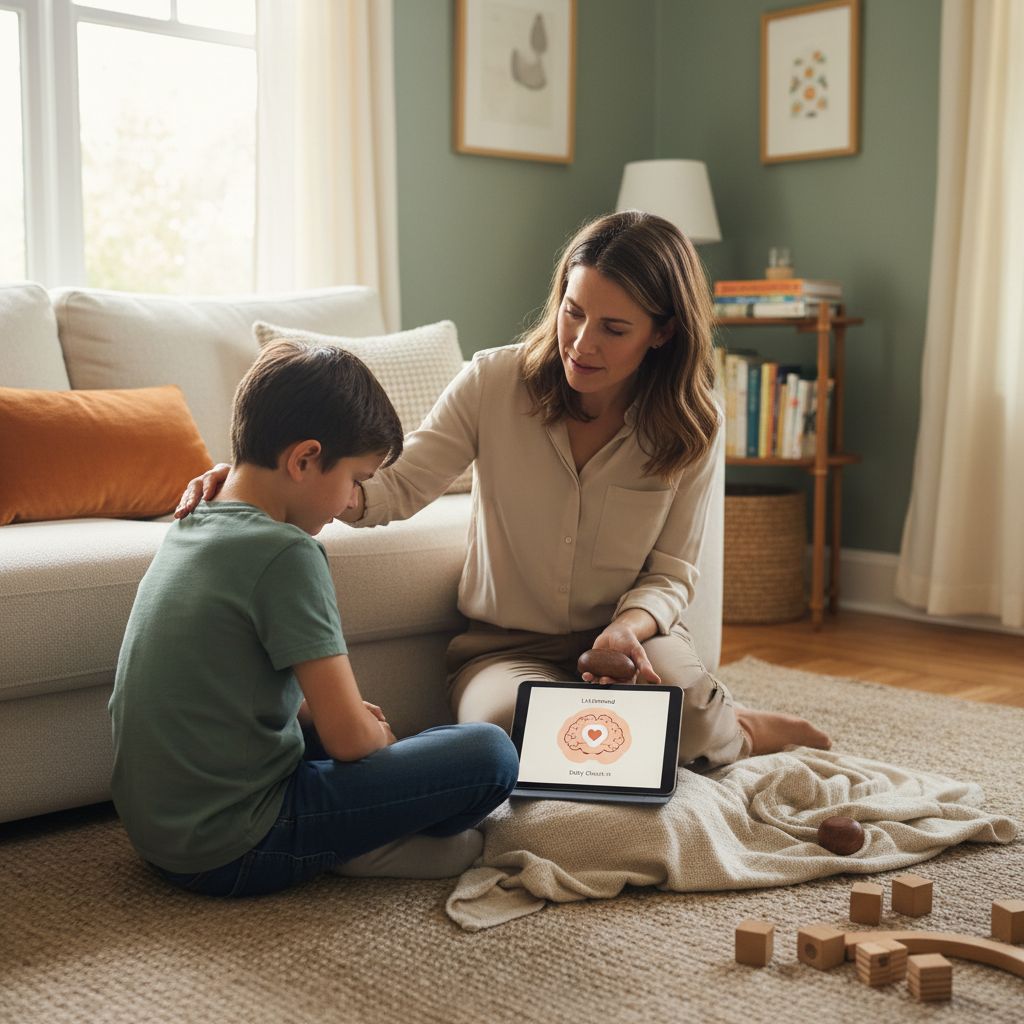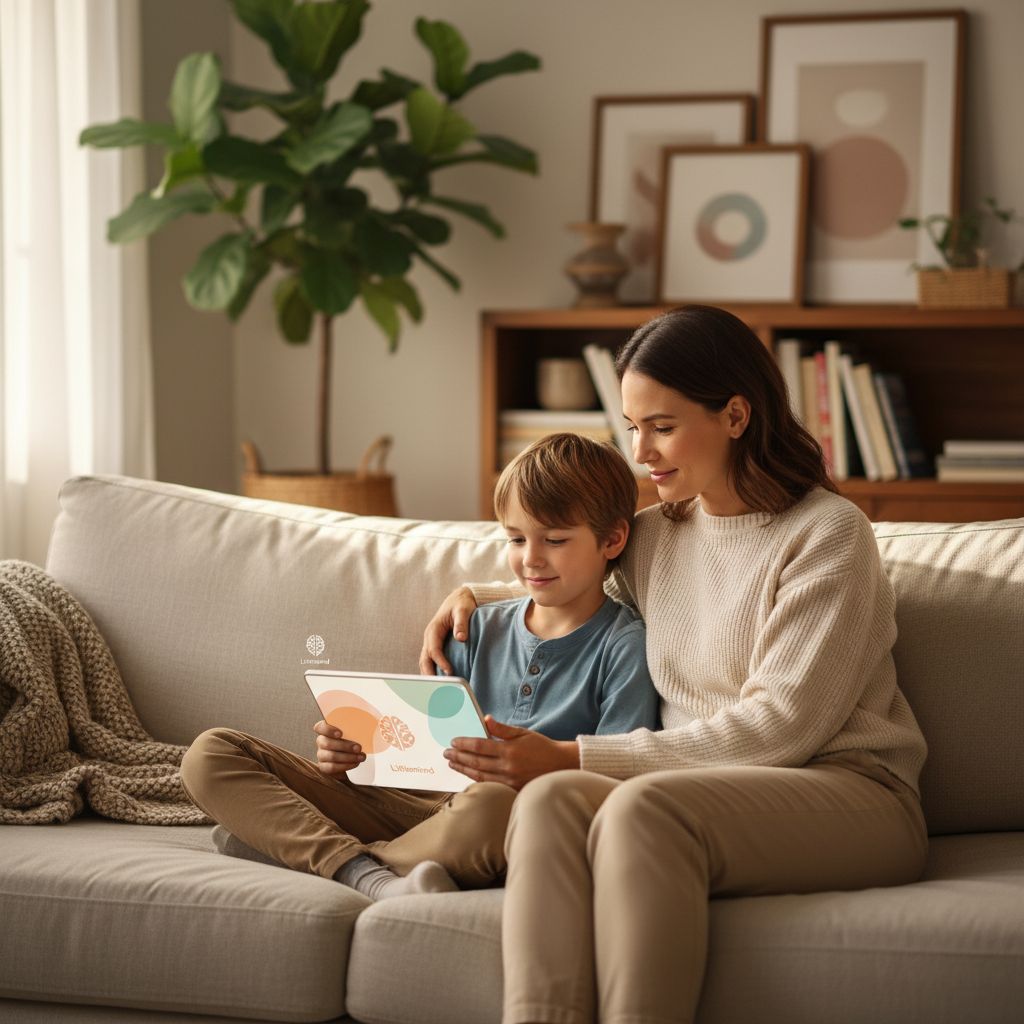
Your usually cheerful eight-year-old has been different lately. More irritable. Quick to tears. You've tried earlier bedtimes, checked in about school, even wondered if something happened with friends. Nothing explains it. Then you start tracking, and the pattern emerges. Every day with high screen time, mood tanks. The connection between screen time and emotions was there all along, invisible until the data made it clear.
You're not imagining things. The screens in your home aren't neutral babysitters, they're actively reshaping how your child feels, regulates, and connects. And unlike growth spurts or friendship drama, this is something you can actually influence once you understand what's happening.
This isn't about demonizing technology or throwing out every device. It's about making the invisible visible: understanding exactly how screens affect your child's emotional wellbeing, then using that knowledge to set boundaries that actually work.
The Hidden Emotional Toll of Excessive Screen Time
Your child's screen glows. Their mood shifts. You've probably noticed the pattern, the irritability after an hour of YouTube, the meltdown when you say "time's up," the emotional flatness that settles in after extended gaming sessions.
This isn't coincidence. Excessive screen time rewires how children process and regulate emotions. Preschoolers (ages 4-6) show increased difficulty identifying their own feelings after heavy screen exposure. They struggle with empathy because they've missed thousands of micro-interactions, reading facial expressions, responding to tone shifts, navigating playground conflicts. For tweens (ages 11-14), the impact manifests differently. Anxiety spikes. Social comparison becomes toxic. The constant dopamine hits from notifications and game rewards make real-world activities feel boring by comparison.

Here's what gets displaced when screens dominate:
- Physical play, climbing, running, rough-and-tumble games that teach risk assessment and emotional regulation
- Unstructured creative time, drawing, building, pretend play where children process experiences and emotions
- Face-to-face interaction, dinner conversations, sibling negotiations, eye contact with parents
The biochemistry tells the story too. Screens trigger rapid dopamine release, the same feel-good chemical released during drug use. Kids chase that high. Blue light suppresses melatonin production, pushing bedtime later and degrading sleep quality. Poor sleep elevates cortisol (your stress hormone), which tanks emotional resilience. The child who could handle disappointment yesterday becomes the child who crumbles today.
Age amplifies everything. A preschooler's brain is building the foundation for emotional intelligence. Every hour on a screen is an hour not learning to self-soothe or read social cues. A tween's brain is restructuring entirely, screen addiction during this phase can hardwire anxiety patterns that persist into adulthood.
The screen isn't neutral. It's actively shaping your child's emotional world.
Understanding these effects is crucial, but knowing the science alone doesn't solve the daily battles over devices, especially when the standard advice doesn't match your reality.
Why Traditional Screen Time Rules Often Fail
Most parents follow the same playbook. Two hours max on weekdays. Maybe three on weekends. Then they wonder why it's not working.
The problem? Those one-size-fits-all limits ignore what actually matters, how your child responds emotionally. The American Academy of Pediatrics offers general guidelines, but they can't account for your seven-year-old's anxiety triggers or your teenager's social needs. What works for one kid crashes and burns with another.
Context changes everything. Your daughter watching a coding tutorial on YouTube isn't the same as her scrolling TikTok for an hour. Active learning engages different parts of the brain than passive consumption. And social connection through FaceTime with grandparents? That's fundamentally different from solo gaming sessions.

Timing matters too. Screen time right before bed disrupts sleep patterns and emotional regulation for the next day. But that same 30 minutes after school might help your kid decompress and transition home. Same duration, completely different outcomes.
Here's what most parents miss: they track minutes but ignore mood. You know exactly how long your son played Minecraft. But do you know if he was irritable afterward? Energized? Anxious? That emotional data tells you whether screen time is helping or hurting. Duration without context is just a number on a timer.
The solution isn't abandoning limits entirely, it's getting smarter about what you measure and how you respond to your child's unique patterns.
Tracking the Screen Time-Emotion Connection
You can't manage what you don't measure. Start by observing four key indicators: mood shifts throughout the day, energy levels during and after screen time, sleep quality at night, and any behavioral changes like increased tantrums or difficulty focusing. Track these alongside actual screen usage hours.
Before you make any changes, document your baseline. Spend one week simply recording what's normal for your child. When do they use screens? For how long? What's their typical mood at breakfast, after school, before bed? This gives you a reference point that makes real changes visible later.
This is where Littlemind's mood tracking feature becomes invaluable. The app connects the dots you'd never see manually, revealing patterns between screen time and emotional states across days or weeks. It's easy to remember yesterday's meltdown but impossible to recall that it happened on four consecutive high-screen-time days.
Here's the difference data makes. "My kid seems more irritable lately" tells you nothing actionable. But "Irritability increases 40% on days with 3+ hours screen time" gives you something concrete to address. You can test reducing screen time and watch that number change.
And when you need outside help, data wins. Pediatricians, therapists, and educators can't work with vague concerns. Walk into an appointment with a month of tracked patterns, and you're having a completely different conversation, one based on evidence, not guesswork.
Once you understand your child's specific emotional responses to screens, you can build limits that actually support their wellbeing instead of triggering constant power struggles.
Establishing Healthy Screen Time Limits That Work for Your Child's Emotional Needs
Your child's screen time limits should reflect their patterns, not a number you grabbed from a parenting article. Track what happens in the hour after they've been gaming for 30 minutes versus 90 minutes. Does irritability spike? Do they bounce back quickly or spiral? That data tells you where the actual boundary needs to be.
Meltdowns rarely happen because you set a limit. They happen because the transition blindsided them emotionally. Give a 10-minute warning. Then a 5-minute one. Better yet, teach them to set their own timer and practice the skill of wrapping up on their own terms. That shift from "Mom is taking this away" to "I'm choosing to stop" changes everything.
Here's what most parents miss: what replaces screen time determines whether your limits actually work. You can't remove dopamine-rich gaming and replace it with homework or chores. The void needs something compelling, a bike ride, cooking together, building projects, shooting hoops in the driveway. Otherwise you're just creating a power struggle.
Build screen-free anchors into your day. Breakfast happens at the table, not in front of YouTube. Morning routines run without phones. The hour before bed belongs to books or conversation. These aren't rules you enforce through willpower, they're rhythms that become automatic.
And when life gets messy? Adjust. A divorce, a cross-country move, starting a new school, these transitions justify temporary flexibility. Screens provide emotional regulation when everything else feels unstable. That's not weakness. It's meeting your child where they are, then gradually rebuilding structure as they stabilize.
Ready to put these principles into practice? Here's a concrete plan to reset your family's relationship with screens over the next month.
From Data to Action: A 30-Day Screen Time Reset Plan
Start with one week of pure observation. Track when screens come out, how long they stay on, and what happens emotionally before and after. You're not changing anything yet, just watching patterns emerge. Write it down or use a simple tracking app.
Weeks two and three are about gentle shifts. Cut back by 15-20 minutes every few days. Maybe that means 30 fewer minutes of gaming, or swapping evening YouTube for a board game. Watch your child's mood during this transition. Some irritability is normal at first (think of it like sugar cravings when you quit dessert). But you should see small improvements by day 10.
Week four is evaluation time. Look for these green flags: your child falls asleep faster, meltdowns decrease, and they actually initiate offline activities without being pushed. That's your signal the new limits are working.
But here's when to pause and get help. If reducing screens makes emotional struggles worse, if anxiety spikes, depression deepens, or your child becomes completely withdrawn, talk to a counselor. Screen time might not be the core issue. Sometimes excessive use masks something deeper that needs professional attention.
Understanding Your Child's Unique Patterns
The relationship between screen time and emotions isn't something you need to navigate blindly. Your child's patterns are there, the data just needs to surface them. Understanding how your specific child responds to screens transforms guesswork into clarity, conflicts into cooperation, and screen time mental health concerns into actionable insights.
You don't need a PhD in child psychology. You need 30 seconds a day and the right tools to track what matters. Try Littlemind's mood tracking app free for 14 days and uncover the screen time-emotion connections unique to your child. Simple daily check-ins reveal patterns you'd never spot otherwise, with privacy protections that keep your family's data secure.
This isn't about achieving perfection or eliminating screens entirely. It's about supporting your child's emotional wellbeing with evidence instead of exhaustion. The patterns are already there, waiting to show you exactly what your child needs.
You don't need to guess anymore, your child's patterns will show you the way.
See what is behind the good and hard days
Littlemind is a 30-second daily check-in for parents of kids aged 4 to 14. Over a few days, gentle AI insights show you patterns in mood, sleep and behaviour, and what helps.