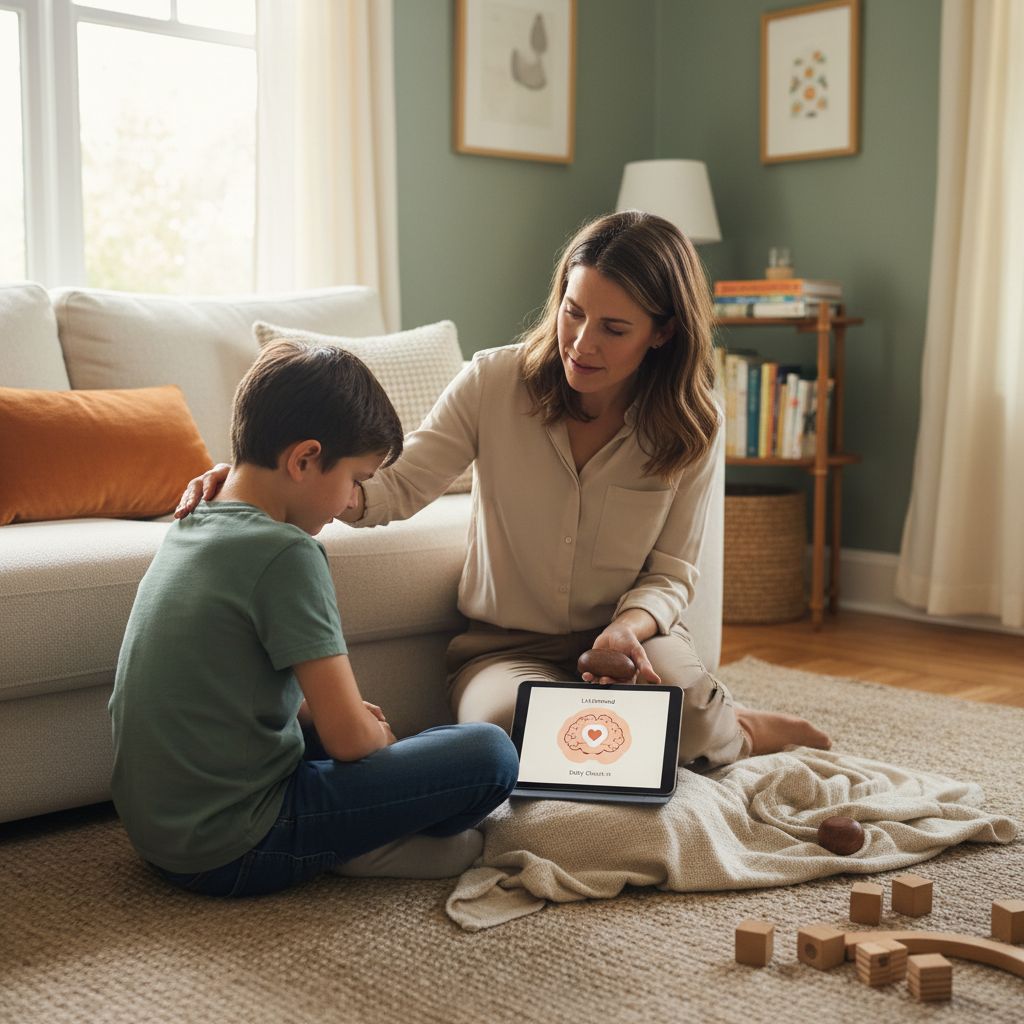
Sarah noticed something was off with her eight-year-old daughter, Emma. Three weeks after their family move across town, Emma seemed withdrawn at dinner, snapped at her younger brother more than usual, and complained of stomachaches every morning. Sarah couldn't pinpoint what was wrong, until she realized Emma hadn't had a single genuine playdate since the move. No backyard adventures. No imaginative games with friends. Just homework, screen time, and early bedtimes.
What Sarah discovered isn't unique to her family. The connection between play and emotional development runs deeper than most parents realize. Play isn't just how children pass time, it's the primary mechanism they use to process emotions they don't yet have words for. When that outlet disappears, even temporarily, the effects ripple through every aspect of a child's wellbeing.
Understanding this connection changes how we support our children through challenges. This article reveals why play matters so profoundly for emotional health and, more importantly, how parents can harness its power during the moments when children need it most.
Why Play Is Essential for Emotional Health
Play isn't just fun and games. It's how children learn to manage their emotions, process stress, and build resilience. But we're not talking about structured soccer practice or piano lessons, we mean the messy, imaginative, kid-led stuff that adults often dismiss as "just playing around."
Here's what happens in the brain. When children engage in unstructured play, they activate the prefrontal cortex and limbic system, the exact regions responsible for emotional regulation. That pretend tea party or improvised pillow fort? It's teaching your child's brain how to navigate disappointment, negotiate conflicts, and recover from setbacks. The neurons are literally wiring themselves for emotional intelligence.

The stress reduction piece is crucial. Play triggers the release of endorphins and reduces cortisol levels. Kids who get regular unstructured play time show lower anxiety markers and better emotional control. They're not bottling things up, they're processing feelings through action and imagination.
Different ages, different skills:
- Ages 4-7: Play builds basic emotional vocabulary. They learn to identify feelings, practice empathy through role-play, and experiment with cause-and-effect in relationships.
- Ages 8-11: Cooperative play develops conflict resolution, patience, and the ability to read social cues. They're figuring out fairness and justice through trial and error.
- Ages 12-14: Creative play becomes an outlet for identity exploration and emotional expression. It's a safe space to test boundaries and process increasingly complex feelings.
Now about screen time. Watching videos or playing app games isn't the same thing. Real play requires interaction, improvisation, and emotional investment. Your kid needs to feel something, create something, negotiate with someone. Passive consumption doesn't build those neural pathways. Neither does following predetermined game rules on a tablet.
The difference matters. And your child's emotional health depends on getting it right.
These neurological foundations translate into measurable outcomes that extend far beyond childhood.
The Measurable Benefits of Play for Children
Play isn't just entertainment. It's how children build the mental scaffolding they'll use for life.
When kids engage in unstructured play, they practice emotional regulation in real time. That moment when a four-year-old loses at tag and has to manage disappointment? That's impulse control developing. The negotiation over who gets to be the dragon? Pure conflict resolution training. These aren't abstract skills, they're being forged through repetition and consequence in environments where the stakes feel real but remain safe.
The social benefits compound quickly. Children who play regularly with peers show stronger empathy (they've practiced seeing things from another perspective). They read facial expressions better. They know when to push back and when to compromise. And they recover from social missteps faster because they've had dozens of chances to mess up and try again.

Play also builds resilience through controlled exposure to failure. Climbing that tree means risking a fall. Building a block tower means watching it collapse. But each attempt teaches kids that setbacks aren't catastrophic, they're just data. This mindset translates directly to how they handle academic challenges and social rejection later.
For children dealing with anxiety or depression, creative play offers an outlet that talk therapy often can't match. Drawing, make-believe, building, these activities let kids process emotions without needing the vocabulary to articulate them yet.
The flip side shows up clearly during transitions. Kids experiencing play deprivation, whether from over-scheduling, excessive screen time, or lack of outdoor access, consistently show higher rates of behavioral issues when starting school or changing environments. Their emotional toolkit simply has fewer tools in it.
Recognizing these benefits is one thing, but catching problems before they escalate requires a different approach.
Connecting the Dots: How Tracking Child Mood Patterns Reveals What's Really Happening
You probably notice when your child seems off. But pinpointing why? That's harder than it looks.
The problem is memory. We remember the big meltdowns and the great days. Everything in between blurs together. So when your pediatrician asks if the mood changes started before or after school began, you're guessing.
Littlemind fixes this by letting you log the basics daily, how much your child played, their energy level, their overall mood. Not a dissertation. Just quick data points that take 30 seconds. Over time, those dots connect themselves into patterns you'd never catch otherwise.
Here's what parents actually find: A seven-year-old's playtime drops from 90 minutes daily to 20 minutes during the first month of second grade. Her irritability spikes at the same time. That's not a coincidence, that's her stress response. Another kid's Lego time doubles during a rough patch, but he's building the same destroyed city over and over. That's avoidance, not healthy coping.
The data also shows you when to relax. Three days of low play and cranky behavior? Probably just a bug coming on. Three weeks of the same pattern? Time to dig deeper.
And here's the practical win: You can share this data. Your co-parent sees the same patterns you do (no more "he's fine at my house" debates). Your therapist gets actual behavior trends instead of your best recollection. Your pediatrician can spot when the new medication changed things, or didn't.
You're not tracking to be perfect. You're tracking because patterns tell the truth when memory fails.
Once you understand what to look for, the next step is providing the right kinds of play opportunities.
Play Activities for Emotional Growth at Every Stage
Your child's age shapes what kind of play builds their emotional toolkit. Here's what works at each stage.
Ages 4-7: Imaginative play is gold right now. Set up a pretend doctor's office where stuffed animals have hurt feelings. Let them squish playdough when they're frustrated, it's not just mess, it's emotional processing. Water play calms big feelings fast. Role-playing different emotions (happy elephant, sad turtle, brave lion) teaches them feelings have names and that's okay.
Ages 8-11: They need games where cooperation matters more than winning. Building forts together (inside or out) teaches problem-solving under pressure. Take them on nature walks and let them lead, it builds decision-making confidence. Story creation works wonders. Start a tale and have them finish it, especially stories about characters facing what they're facing.
Ages 12-14: Strategic board games mirror real-life emotional decisions without the stakes. Team sports teach resilience when you lose and grace when you win. Give them art supplies with zero expectations, sketching, writing, music-making with no audience builds emotional vocabulary. Try escape room puzzles or building challenges that require patience.
During transitions like divorce or moves, repetitive activities soothe (making friendship bracelets, shooting hoops). They need predictability somewhere.
Busy families can try 15-minute connection plays: dance party in the kitchen, collaborative doodle on one page, or "emotion charades" during dinner prep.
Watch for signs they need more unstructured time. If they're irritable after school, resisting homework more than usual, or can't settle at bedtime, they're probably overscheduled. Boredom isn't the enemy, it's where emotional processing happens.
Turning Understanding Into Action
Understanding the connection between play and emotional development gives you a powerful lens for supporting your child. But awareness alone isn't enough, especially during challenging transitions when subtle changes can signal bigger struggles.
This is where tracking transforms everything. When you document both playtime and mood patterns, even briefly each day, you create a record that reveals what your memory can't. You'll spot the dip in outdoor play that preceded the school anxiety. You'll notice the correlation between creative activities and calmer evenings. You'll have actual data when you need to make decisions about schedules, screen time, or whether to seek additional support.
Start simple: log one week of your child's play and mood. Note how much unstructured play they get, what kinds of activities they gravitate toward, and how their emotional state shifts. You might be surprised what patterns emerge, and how quickly you gain clarity about what your child actually needs.
Littlemind makes this effortless with pattern detection features designed specifically for busy parents. In just 30 seconds daily, you can track the data points that matter most, then let the app reveal insights about play therapy emotional health connections you'd never catch on your own. Because the goal isn't perfect parenting, it's informed parenting that helps your child thrive through whatever comes next.
See what is behind the good and hard days
Littlemind is a 30-second daily check-in for parents of kids aged 4 to 14. Over a few days, gentle AI insights show you patterns in mood, sleep and behaviour, and what helps.