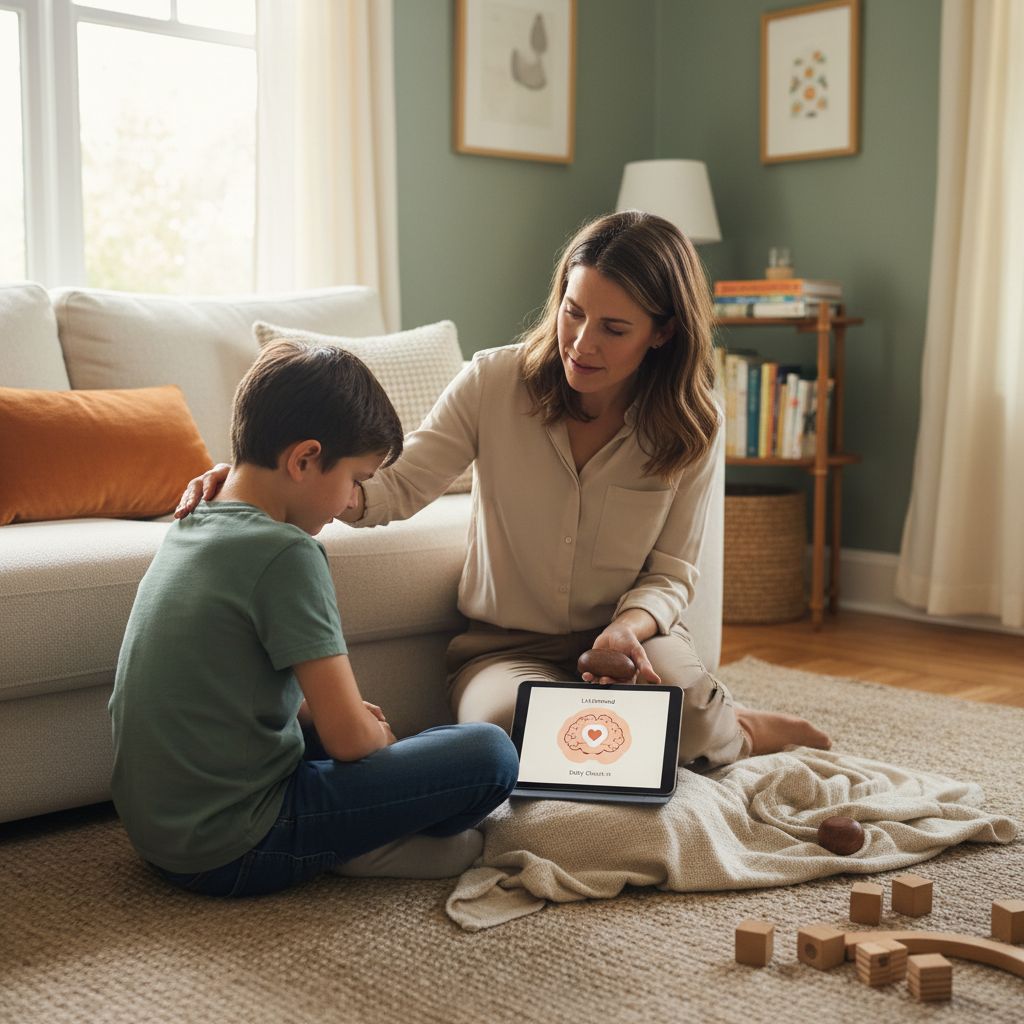
Your eight-year-old melts down over a minor setback, again. The lost soccer game. The friend who chose someone else for a group project. The math problem that won't cooperate. You wonder: Am I actually building resilience in children, or am I just watching mine crumble under pressure?
Here's what most parents get wrong about resilience: it's not about raising tough kids who never fall apart. It's about raising adaptable ones who know how to put themselves back together. Resilience is flexibility, not armor.
This guide gives you something better than generic advice. You'll get a practical toolkit of strategies, backed by pattern-awareness and real data about your specific child. Because what works for your neighbor's kid might do nothing for yours.
The difference between guessing and knowing changes everything.
What Is Resilience and Why It Matters More Than Ever
Resilience isn't about toughness or never feeling knocked down. It's the ability to adapt when life throws curveballs, bounce back from setbacks, and navigate challenges without falling apart. Think of it as emotional flexibility, bending under pressure instead of breaking.
And right now? Kids need this skill more than ever.

We're living through a pace of change that would've seemed impossible a decade ago. AI is reshaping how we work and learn. Social media amplifies every anxiety and comparison. Global uncertainty, from climate concerns to economic shifts, creates a background hum of stress that even young children pick up on. The world won't slow down. So our kids need to build the capacity to move through it.
Here's where many parents get it wrong (and it's totally understandable). We want to shield our children from pain. Remove every obstacle. Smooth every rough edge. But there's a crucial difference between protecting kids from adversity and equipping them to handle it. The first creates fragility. The second builds strength.
The payoff is real and long-lasting. Resilient kids develop better mental health outcomes, they don't spiral when things go sideways. They form stronger relationships because they can work through conflict. They perform better academically because they see failures as learning moments, not dead ends. And later? They adapt to career changes, economic shifts, and life transitions that would paralyze someone who never learned to recover.
You're not building armor. You're building bounce-back ability. There's a difference.
The Five Core Components of Childhood Resilience
Understanding what makes resilient children requires breaking down the skill into its essential parts.
Resilience isn't one skill. It's five interconnected abilities that work together when kids face adversity.
Emotional regulation forms the foundation. A child who can recognize "I'm frustrated" instead of just exploding has already won half the battle. They pause, take three deep breaths, maybe step away from the situation. This doesn't mean suppressing emotions, it means experiencing them without being controlled by them.

Problem-solving skills turn overwhelming situations into concrete steps. When a middle schooler faces a group project gone wrong, they don't spiral. They break it down: What can I control? What needs to happen first? Who can help? The problem shrinks from impossible to merely difficult.
Social connection acts as a safety net. Resilient kids know that asking for help isn't weakness. They've got a trusted adult they can text at 10 PM. They have friends who get it. And they've learned which relationships drain them versus which ones fill them back up.
Self-efficacy drives action. It's the quiet confidence that says, "I've handled hard things before." A teenager who struggled through algebra but eventually got it? They now approach chemistry differently. They've internalized proof of their own capability.
Optimistic thinking provides perspective without toxic positivity. A resilient child doesn't pretend everything's fine. But they can hold two truths simultaneously: This situation is genuinely hard right now, and it won't stay this hard forever. They find small pockets of meaning even when circumstances feel meaningless.
How Understanding Patterns Strengthens Resilience-Building
Knowing these components is one thing, but effective parenting strategies resilience requires understanding how they show up in your unique child.
You've read the articles. Tried the breathing exercises. Downloaded the mindfulness apps. But your child still melts down every Monday morning while their best friend seems fine.
Here's why: generic resilience advice assumes all children respond to stress the same way. They don't. One kid bounces back after physical activity. Another needs quiet time alone. A third processes emotions through creative play.
The real breakthrough comes when you identify your child's specific patterns, what triggers their stress, how they show it, and what actually helps them recover. Not what works for other families. What works for yours.
This is where simple tracking changes everything. When you log mood, energy levels, and behavior for just 30 seconds each day, patterns emerge that you'd never notice otherwise. Maybe irritability spikes after late bedtimes. Or anxiety rises on days without outdoor time. Or emotional regulation improves dramatically after protein-rich breakfasts.
Tools like Littlemind make this pattern recognition effortless. Quick daily check-ins create a timeline that reveals connections you'd miss in the chaos of parenting. That Monday morning struggle? The data might show it's not about school at all, it's the disrupted sleep schedule from weekend sleepovers.
This transforms how you support your child. Instead of thinking "My kid is struggling and I don't know why," you're working with concrete insights. You move from reactive to strategic. From guessing to knowing.
And that knowledge becomes the foundation for building resilience that actually sticks.
Seven Practical Strategies to Build Resilience Daily
With pattern awareness guiding you, these daily practices become targeted interventions rather than random experiments.
Resilience isn't built in grand moments. It's constructed through small, repeated actions that compound over time.
Start with predictable routines. When life throws chaos at a child, divorce, relocation, switching schools, routines become their anchor. Same breakfast time. Same bedtime ritual. Same Tuesday pizza night. These patterns create a foundation of safety when everything else feels unstable.
Reframe failure as data collection. Your daughter bombs her math quiz? That's not a catastrophe. That's information. "What did this test teach you about how you study?" This shift, from failure as identity to failure as feedback, changes everything.
Build their emotional vocabulary. Kids can't manage feelings they can't name. Move beyond "fine" and "mad." Teach them disappointed, frustrated, overwhelmed, anxious. When they can identify the emotion, they can begin to regulate it.
Set up manageable challenges. Age-appropriate risks build confidence like nothing else. Let your seven-year-old order their own meal. Your ten-year-old navigate public transit with supervision. Your teenager plan a weekend trip. Each small success creates proof they can handle hard things.
Show them your resilience in real time. Don't hide when you're stressed. Narrate it. "I'm frustrated this project got rejected, so I'm going for a walk to clear my head, then I'll revise it." They need to see your process, not just your outcomes.
Cultivate one strong relationship beyond your household. A coach. An aunt. A neighbor. Research consistently shows that one stable, caring adult outside the nuclear family dramatically improves outcomes for kids facing adversity.
Praise the path, not the prize. "You studied every night this week" beats "You're so smart" every time. Effort and strategy are controllable. Outcomes aren't always.
And here's where tracking matters. Littlemind helps you see which strategies actually shift behavior patterns. You'll notice that the week you implemented consistent routines, meltdowns dropped by half. Or that teaching emotion words reduced sibling conflicts. Data turns intuition into strategy.
Resilience During Major Life Transitions
These strategies become especially critical when your child faces significant changes, and tracking child development through transitions reveals what generic advice never could.
Major life transitions hit kids harder than most parents realize. A divorce. A new sibling. Switching schools or moving across town. These moments don't just create temporary stress, they reshape how children understand stability and their place in the world.
But here's what most parents miss: the quiet signs. A child who suddenly becomes "too helpful" might be suppressing anxiety. One who stops talking about their day could be withdrawing. Sleep changes, new clinginess, or aggression toward pets, these aren't just phases during transitions. They're distress signals.
Consistent emotional tracking during high-stress periods gives you early warning data instead of crisis management. You'll spot patterns before they become problems. A mood dip every Sunday night before the custody exchange. Anger spikes on days they visit the new house. Real data beats guesswork.
During transitions, double down on connection time. Even 15 uninterrupted minutes daily makes a difference. Keep some routines sacred (bedtime stories, Tuesday pancakes, whatever anchors them). And validate the messy feelings without trying to fix them. "This is really hard" beats "You'll adjust soon" every time.
The biggest advantage? Shareable data. When you can show a therapist or teacher exactly when mood shifts happen, they can coordinate support that actually targets the problem. Co-parents working from the same emotional data stop arguing about whose house is "the issue" and start solving together.
Building Resilience Through Understanding Your Child
Resilience isn't built overnight. It's accumulated through small, consistent practices, the kind you can actually maintain on a Tuesday morning when everyone's running late.
Start with one strategy from this guide. Track its impact over 2-3 weeks. Notice what shifts. What feels easier. What your child responds to.
And here's the thing nobody tells you: you need self-compassion in this process. You'll miss cues. You'll react instead of respond. That's not failure, that's being human.
This is where Littlemind's pattern detection changes everything. Instead of guessing whether your approach is working, you see actual trends in your child's emotional resilience kids develop over time. No more second-guessing yourself at 2 AM. Just clear data that builds your confidence as a parent.
The most effective child resilience development happens when you understand your specific child, not when you follow someone else's formula. Take 30 seconds today to log your child's mood and behavior. Do it again tomorrow. Within weeks, you'll have insights that transform how you support them through challenges.
Building resilience in children isn't about perfection. It's about presence and observation. Notice the patterns. Adjust when needed. Trust that small, consistent efforts compound into real strength, for both of you. Start tracking today and discover which strategies actually work for your family.
See what is behind the good and hard days
Littlemind is a 30-second daily check-in for parents of kids aged 4 to 14. Over a few days, gentle AI insights show you patterns in mood, sleep and behaviour, and what helps.